

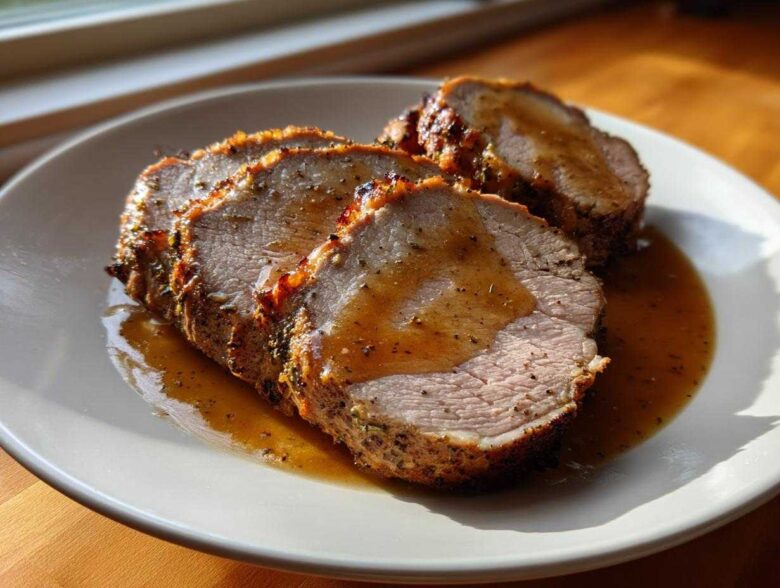
We’ve all been there, right? You spend all that time prepping a beautiful pork loin roast, only to slice into it and find dry, sad layers staring back at you. It’s a total letdown, especially when you’re hoping for a centerpiece for your sunday roast recipe, or even just an easy pork dinner mid-week. Well, trust me, that tragedy ends today. I’m Noah, and when I look at a recipe, I look at the science locking in that moisture. This approach guarantees a truly juicy pork loin every single time. We’re keeping the ingredients simple—just salt, pepper, and a few herbs—because the technique is what truly matters here.
Why This Juicy Pork Loin Roast Recipe Works for Any Dinner
I’m telling you, this is the recipe that fixed my family’s issues with dry pork. It’s fast enough to make an amazing weeknight dinner, but impressive enough for a proper roast. We ditched the complicated rubs and focused on what really keeps the meat tender. If you’re looking for an easy pork dinner that delivers massive flavor with minimal fuss, this is it.
- Guaranteed juicy pork loin results thanks to a targeted internal temperature.
- Simple spice blend means the natural pork flavor shines through.
- Low effort but high reward—perfect for busy nights!
The Science Behind a Tender Pork Loin Roast
It all comes down to two things, scientifically speaking: surface dehydration and post-cook fluid migration. Patting the roast bone-dry before seasoning helps develop that perfect outer crust. Then, resting the meat lets the internal juices settle back into the muscle fibers instead of running all over the cutting board. It’s simple physics, but it makes all the difference!
Ingredients for Your Perfect Pork Loin Roast
I always keep this list short and sweet. When you have a great cut of meat, you don’t need to bury it under a dozen complicated things. Everything here is designed to support a beautiful oven roasted pork look and texture without adding unnecessary steps to your cooking time. Remember, we’re aiming for that easy pork dinner perfection!
For the Simple Seasoning Rub
- One (3 to 4 pound) pork loin roast, bone-out
- 1 tablespoon olive oil
- 1 teaspoon kosher salt
- 1/2 teaspoon black pepper
- 1/2 teaspoon garlic powder
- 1/2 teaspoon dried thyme
See? Just five seasoning components, plus the oil to help them stick. It’s amazing the depth of flavor you can get just by relying on quality salt and herbs.
For the Quick Pan Sauce Gravy
- 1 cup chicken broth (for the pan sauce)
- 1 tablespoon cornstarch mixed with 2 tablespoons cold water (that’s your slurry!)
This little addition transforms the drippings into a lovely pan sauce gravy, taking your meal from everyday to Sunday roast status in about two minutes flat.
Step-by-Step Instructions for Oven Roasted Pork
Alright, let’s get this show on the road! When you see the word ‘roast,’ your brain might flash to some hour-long ordeal, but this oven roasted pork is designed for maximum flavor impact in minimal hands-on time. We are using a two-stage temperature approach here. That initial blast of heat is what sets that beautiful crust, which helps trap all the good juices inside. Trust me, follow these moves exactly, and you’ll see why I call this the foolproof method.
Preparing the Pork Loin Roast for Roasting
First things first: that oven needs to crank up to 400 degrees Fahrenheit! While it’s heating up, grab your paper towels. You absolutely have to pat that pork loin roast completely dry—I mean completely. Any surface moisture will steam the meat instead of searing it, which is the opposite of what we want for a good crust on this pork loin roast. Once dry, rub it down evenly with that olive oil, then sprinkle on every bit of your seasoning mix. Press it gently so the herbs stick tight!
Roasting Times and Achieving the Right Pork Loin Internal Temp
Now, put that seasoned roast into the hot oven for the first 15 minutes at 400°F. After that quick blast, you need to drop it down sharply to 350 degrees Fahrenheit. This is where the magic happens slowly. You’re aiming for a pork loin internal temp of exactly 145 degrees Fahrenheit. Pull it out the second your thermometer hits that mark—don’t guess! That 145°F is the spot where the meat is cooked perfectly and remains incredibly tender.
The Essential Resting Period for a Juicy Pork Loin Roast
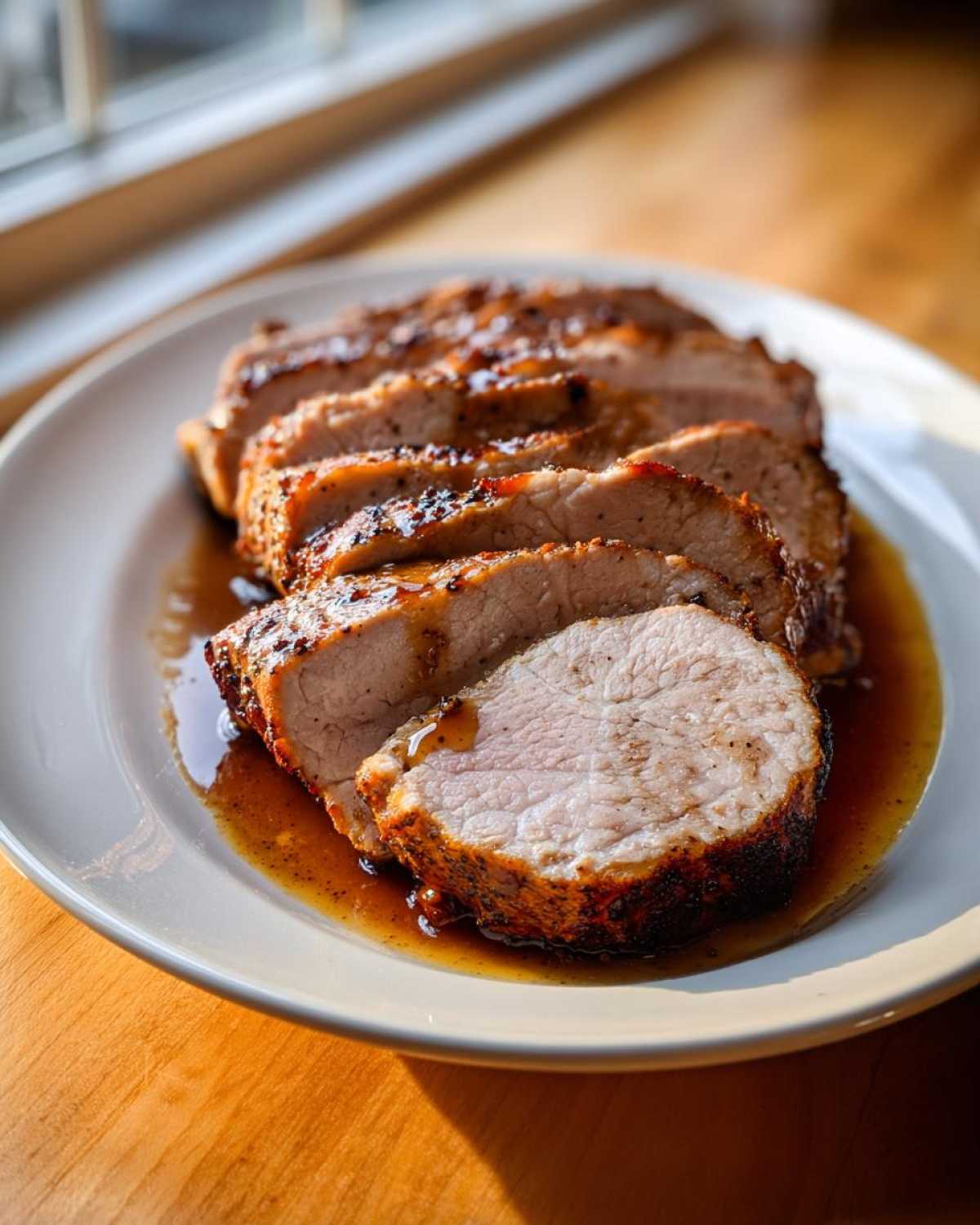
Okay, this part is non-negotiable, and I promise it’s where 90% of home cooks go wrong when trying to nail that juicy pork loin. Once that roast hits 145 degrees Fahrenheit, you need to pull it out immediately, even if it feels technically “done” to you. Why? Because the meat is screaming hot, and those juices are currently doing a chaotic sprint toward the center of the roast.
If you slice it right then and there, all that delicious moisture flies right out onto your cutting board. We don’t want a dry roast; we want a moist one! So, tent it loosely under foil—don’t wrap it tight, or you’ll steam that lovely crust we worked hard to build. You need to let this magnificent hunk of pork rest for a minimum of 10 minutes.
This resting time allows the muscle fibers to actually relax and reabsorb those juices. Think of it as mandatory vacation time for your meat. After 10 minutes, when you slice into that pork loin roast, the juices stay locked inside where they belong. It’s the simplest rule, but it’s the most powerful one for flavor retention!
Making the Pan Sauce Gravy After Your Pork Loin Roast
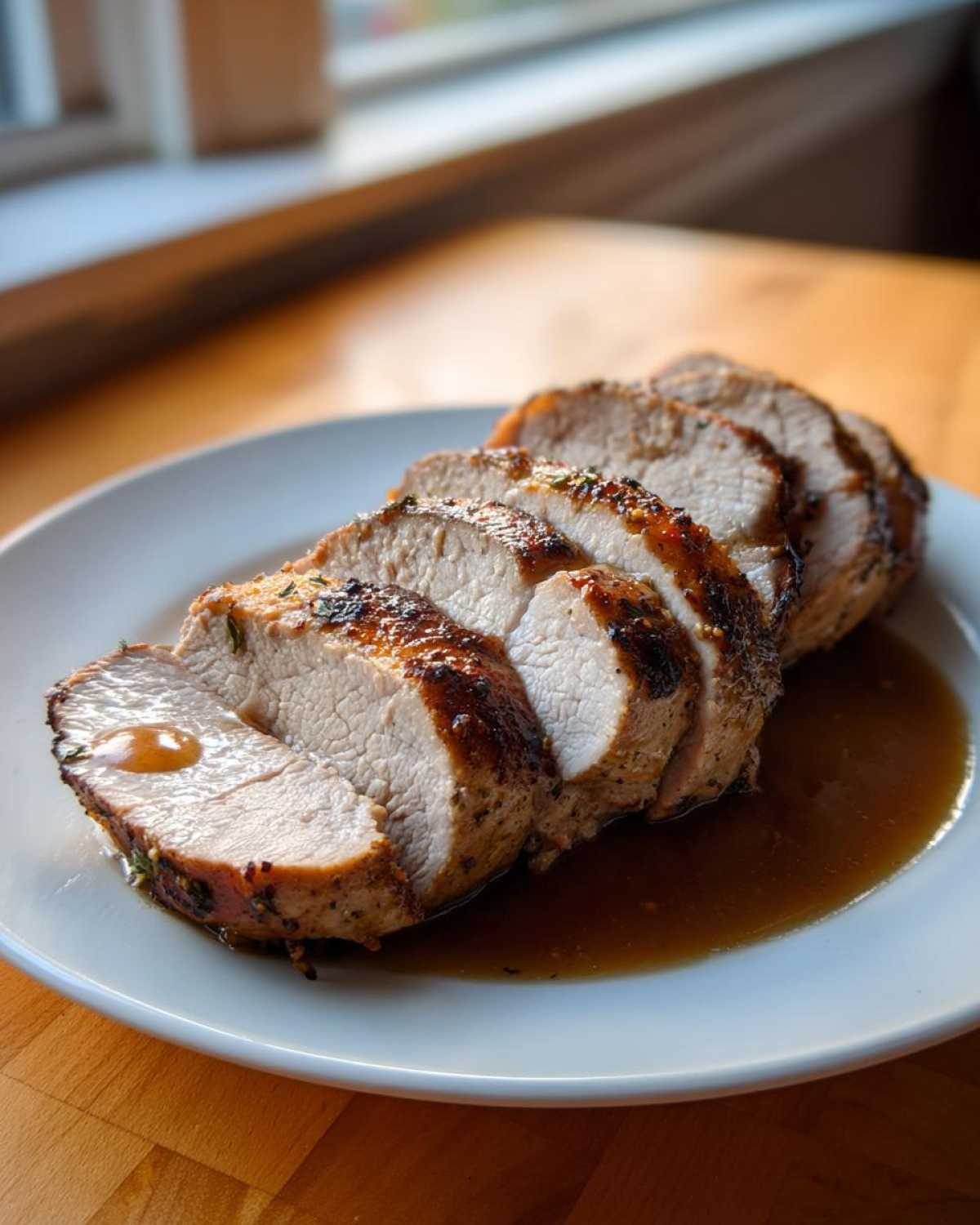
This is the part where we turn boring, stuck-on brown bits into liquid gold! While your beautiful pork loin roast is resting, put that roasting pan right onto your stovetop over medium heat. You don’t even need another pot. This is how you create a fantastic pan sauce gravy without adding extra cleanup.
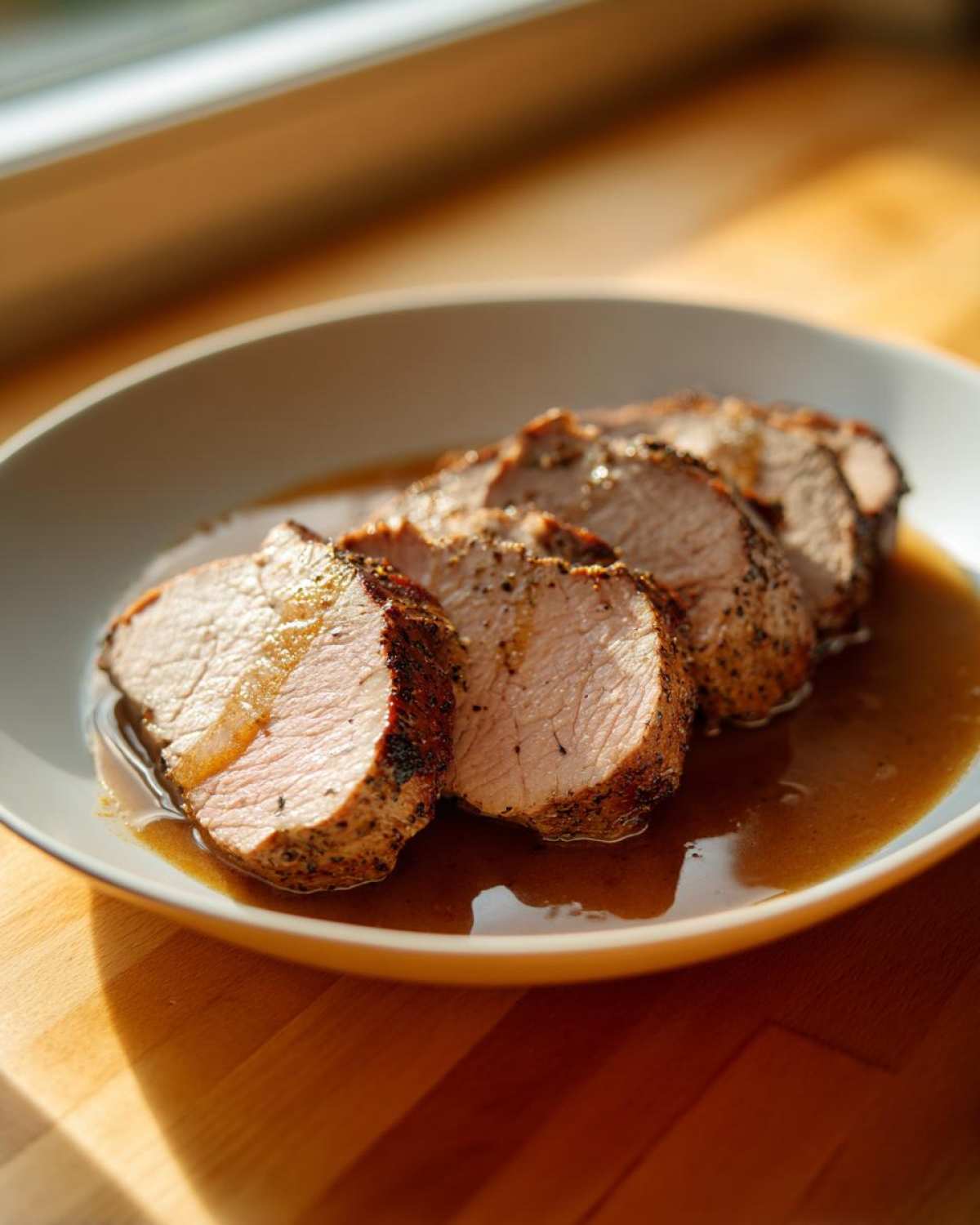
Use a wooden spoon to scrape up everything stuck to the bottom—that’s where all the flavor lives! Pour in your cup of chicken broth and let it come up to a nice simmer. Then, grab that cornstarch slurry we mixed earlier. Whisk it in slowly. Keep stirring until the sauce starts coating the back of your spoon, which only takes a minute or two. That’s it! Pour that incredible gravy right over your perfectly rested slices for the ultimate sunday roast recipe finish.
Tips for the Best Pork Loin Roast Every Time
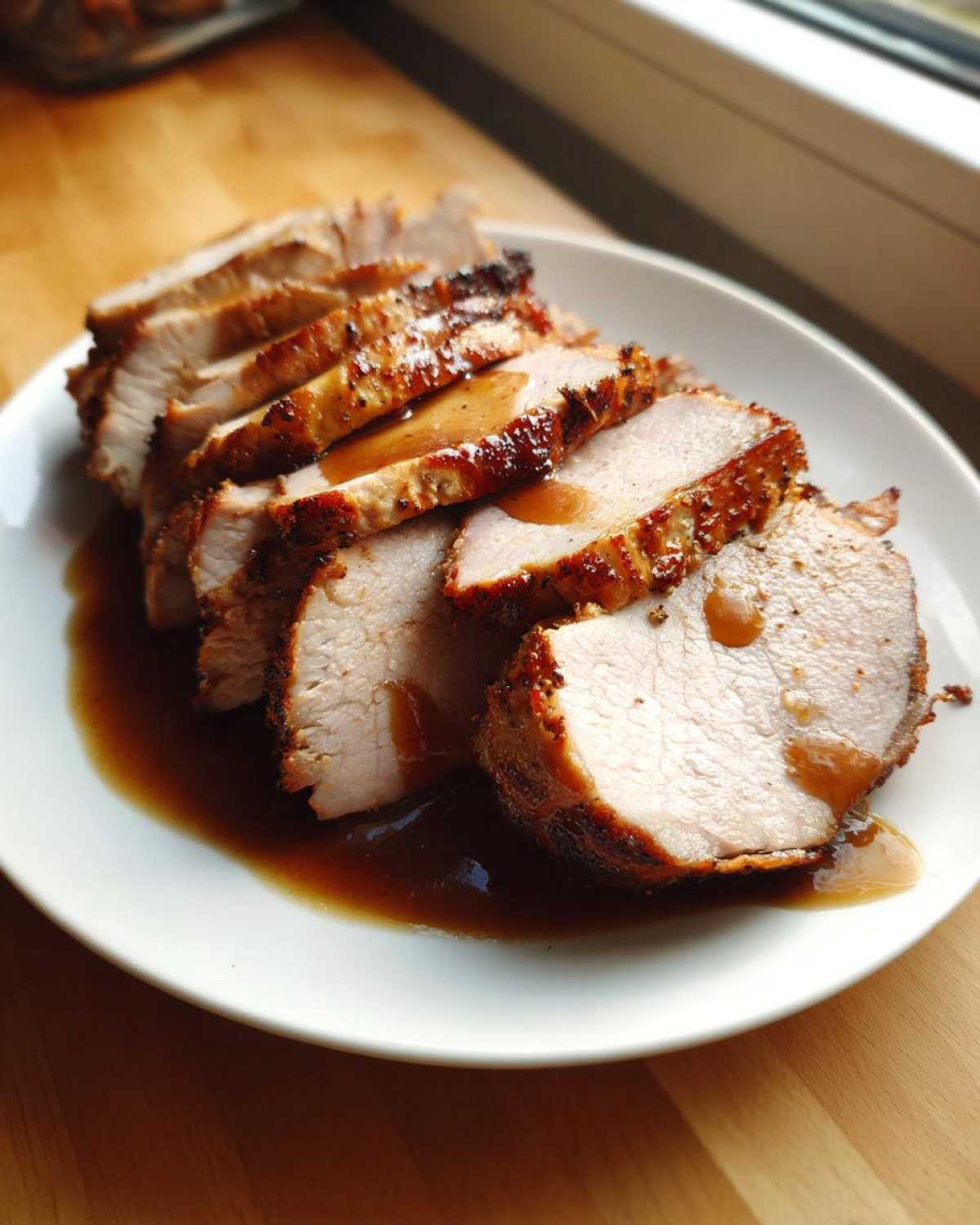
Even with a foolproof recipe, sometimes you just want extra insurance, especially when cooking a big cut of meat like this pork loin roast. I recall one time Martha tried to wing the timing because the oven timer was being fussy—big mistake! We ended up having to revive those slices by drowning them in so much broth, it was practically soup. That taught me that trusting the process, especially the temperatures, is way better than trusting memory.
We need to talk about searing, too. The recipe above works beautifully without it, which makes it great for a quick weeknight dinner, but if you have those extra five minutes? Go for the sear! Heat a little oil in that same oven-safe skillet until it’s barely smoking, and then place the seasoned roast in there for maybe two minutes per side. That high, direct heat creates a deep, flavorful crust that you just can’t build when you start cold in the oven. It adds structure and depth without adding complexity to the overall roasting time.
Using the Right Tools for Your Pork Loin Roast
If you take away one single piece of advice from me, the resident recipe scientist, it’s this: invest in a good, instant-read meat thermometer. I know, I know, it feels fussy, but it’s the only way to guarantee you hit that perfect pork loin internal temp of 145 degrees Fahrenheit without overshooting it.
Guessing on temperature is why you end up with that dry roast I mentioned earlier. You just insert it right into the thickest part of the meat, avoiding any bone or large fat pockets. Once that thermometer tells you 145°F, you pull it out instantly. The residual heat (carryover cooking) will take it up just a tiny bit more while it rests, resulting in the most tender, safe, and perfectly cooked piece of pork you’ve ever made. Seriously, this tool is the secret weapon for any oven roasted pork experiment!
Serving Suggestions for Your Easy Pork Dinner
So, you’ve nailed the perfect pork loin roast, and you’ve got that luscious pan sauce gravy ready to go. Now we just need the supporting cast! You don’t need a ton of fuss here; the beauty of this dish is how well it integrates with simple sides. Whether this is for a Tuesday night or a big sunday roast recipe, these pairings keep the focus right where it should be: on that tender pork.
When I’m looking for speed, I usually lean toward things that take care of themselves while the roast is resting. Here are a few of my go-to ideas for turning this into a complete, satisfying meal:
- Simple Smashed or Roasted Potatoes: If you roast the potatoes alongside the pork (just make sure they are safe in the pan at the start, or do them separately), you can spoon some of that pan sauce gravy right over them. They soak it up like little flavor sponges!
- Steamed Green Beans with Lemon Zest: This is my favorite quick fix. Green beans are vibrant and cook so fast. Tossing them with a little butter and some fresh lemon zest right at the end adds a nice, acidic pop that cuts through the richness of the pork perfectly.
- Fluffy Dinner Rolls: You absolutely need something on the table specifically designed to mop up every last drop of that gravy! There’s no shame in grabbing a good quality store-bought roll, but if you have time, baking some homemade ones—like my favorite buttery dinner rolls—is totally worth the effort for the grand finale of sauce cleanup.
Keep it simple, focus on contrasting colors and textures, and your easy pork dinner will feel like a million bucks without the effort!
Storing Leftover Pork Loin Roast
Oh, leftovers! That’s the best part of making a big roast for your sunday roast recipe, isn’t it? When saving your delicious pork loin roast, make sure you keep the meat sliced safely away from the pan sauce gravy. They just don’t play nice together in the fridge long-term.
Store the gravy in a small, sealed container. For the leftover pork, keep it tightly wrapped. Seriously, if you want that juicy pork loin quality to last, don’t let it dry out in the open air!
For reheating, I always say to reheat the slices gently either in a skillet with a splash of water or broth, or even nestle them right into the leftover gravy in a small saucepan. Keep the heat low! That little bit of liquid keeps those lean slices tender when you’re ready for a quick weeknight dinner redo.
Frequently Asked Questions About Pork Loin Roast
I get so many questions on Instagram about tweaking this recipe, which totally makes sense! When you nail a great pork loin roast, you start wondering about substitutions and shortcuts. I totally get wanting to adjust things, especially if you’re trying to whip up an easy pork dinner on a whim. Let’s run through the most common things I hear from folks trying this out.
What is the safe pork loin internal temp?
This is the most important question you can ask, honestly! For a perfectly safe and unbelievably juicy pork loin, you must pull the roast out of the oven when your thermometer reads exactly 145 degrees Fahrenheit. The USDA confirms this is the safe temperature, and because we let the meat rest afterward, those juices redistribute beautifully. Checking that pork loin internal temp ensures you’re safe without being dry! Don’t skip the thermometer!
Can I cook this pork loin roast from frozen?
Oh, I really wouldn’t recommend it for this specific method. This oven roasted pork relies on that initial high blast of 400°F to develop a great crust before we drop the heat down. If you start with a frozen center, the outside is going to cook way too fast trying to thaw the inside, and you’ll end up with dry edges and probably an uncooked middle. It throws off the whole timing for the pork loin internal temp we are aiming for. Better to plan ahead and let it thaw overnight in the fridge!
What if I don’t have chicken broth for the pan sauce gravy? That’s an easy fix! You can use water, but honestly, it won’t have the body or flavor to make a great pan sauce gravy. If you have any white wine on hand, deglaze the pan with about half a cup of wine first, let that bubble down for a minute, and then add water or veggie stock. It gives you a much better base for your easy meal boost!
If you’ve got other questions about tackling your sunday roast recipe or need to reach out about a recipe rescue, feel free to send a note through the contact page. We love hearing from you!
PrintJuicy Oven Roasted Pork Loin Roast
Follow this simple recipe for a tender, juicy pork loin roast cooked perfectly in the oven, complete with instructions for a quick pan sauce.
- Prep Time: 10 min
- Cook Time: 60 min
- Total Time: 70 min
- Yield: 6 servings
- Category: Dinner
- Method: Oven Roasting
- Cuisine: American
- Diet: Low Fat
Ingredients
- 1 (3 to 4 pound) pork loin roast, bone-out
- 1 tablespoon olive oil
- 1 teaspoon kosher salt
- 1/2 teaspoon black pepper
- 1/2 teaspoon garlic powder
- 1/2 teaspoon dried thyme
- 1 cup chicken broth (for pan sauce)
- 1 tablespoon cornstarch mixed with 2 tablespoons cold water (for pan sauce slurry)
Instructions
- Preheat your oven to 400 degrees Fahrenheit.
- Pat the pork loin roast completely dry with paper towels. This helps create a good crust.
- In a small bowl, mix the kosher salt, black pepper, garlic powder, and dried thyme.
- Rub the entire surface of the pork loin roast evenly with the olive oil, then sprinkle and press the seasoning mixture onto the meat.
- Place the seasoned pork loin roast in a roasting pan or a large oven-safe skillet.
- Roast at 400 degrees Fahrenheit for 15 minutes.
- Reduce the oven temperature to 350 degrees Fahrenheit and continue roasting until the internal temperature reaches 145 degrees Fahrenheit on a meat thermometer inserted into the thickest part of the roast. This usually takes about 15 to 20 minutes per pound.
- Remove the pork loin roast from the oven when it reaches 145 degrees Fahrenheit.
- Transfer the roast to a cutting board, tent it loosely with foil, and let it rest for at least 10 minutes before slicing. This resting time is key for a juicy pork loin.
- While the pork rests, make the pan sauce: Place the roasting pan over medium heat on the stovetop. Scrape up any browned bits from the bottom of the pan.
- Pour in the chicken broth and bring to a simmer, stirring well.
- Whisk in the cornstarch slurry and cook until the sauce thickens slightly, about 1 to 2 minutes.
- Slice the rested pork loin roast against the grain and serve immediately with the pan sauce gravy.
Notes
- For the best results, use a reliable meat thermometer to check the pork loin internal temp; 145 degrees Fahrenheit is the safe target for doneness.
- If you prefer a stronger crust, sear the roast on all sides in a hot, oiled skillet before placing it in the oven.
- This recipe works well for a weeknight dinner or a Sunday roast.
Nutrition
- Serving Size: 4 oz cooked
- Calories: 280
- Sugar: 1
- Sodium: 350
- Fat: 12
- Saturated Fat: 4
- Unsaturated Fat: 8
- Trans Fat: 0
- Carbohydrates: 2
- Fiber: 0
- Protein: 40
- Cholesterol: 100