

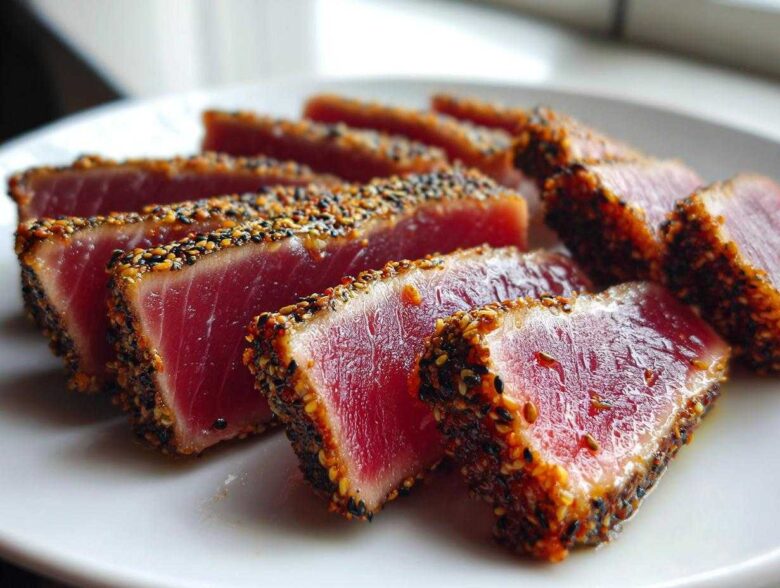
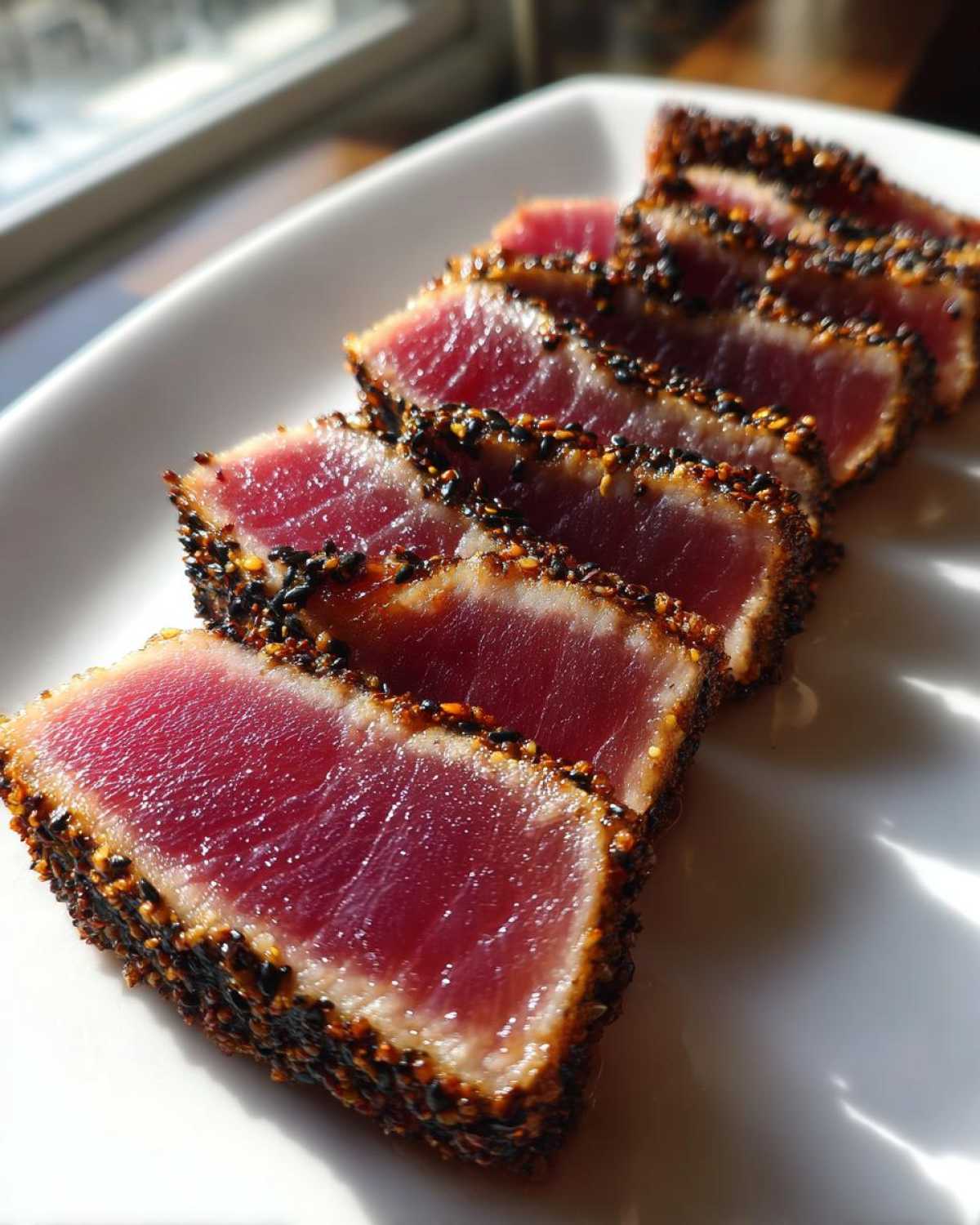
Listen, I’m going to let you in on a little secret: getting that gorgeous, crispy, dark crust on a ruby-red center of **Seared Ahi Tuna** isn’t some fancy trick only chefs know. It’s pure technique, and the internet is full of frustratingly vague instructions that lead to sad, grey fish. But here at Savor And Pin, we fix those broken promises! Ben, Noah, and I tore this technique apart until we found the absolute foolproof way to create restaurant-quality fish right here in your kitchen. As you can see from our work over at About Us, we hate broken cooking promises. This is the definitive guide to making flawless, gourmet tuna every single time. Forget the failures; we’re making magic now!
Why This Seared Ahi Tuna Recipe Works (The Fix)
The reason so many Ahi recipes fail is that people treat this delicate fish like a regular steak. Nope! We figured out the exact system required for that beautiful contrast: deep, dark crust meets cool, rare center. That’s the sign of truly gourmet tuna. Noah, our resident food scientist, insisted that the absolute number one step is getting the surface bone-dry. If there’s water, you steam, you don’t sear!
Then Ben came in with his usual drama: “If the pan isn’t smoking, it’s not hot enough!” And honestly? He was right about the heat. This quick preparation relies entirely on instantaneous, intense contact heat to build that crust fast.
The Secret to a Perfect Seared Ahi Tuna Crust
You absolutely must pat those beautiful steaks dry. I mean, use half a roll of paper towels until you think they can’t possibly be any drier. Seriously, moisture is the enemy of a good crust. Once they are dry, the next secret is pure, unadulterated heat. Get your cast iron skillet until it’s screaming hot—it should look like it’s about to catch fire! That high temperature instantly caramelizes the outside, locking in all the flavor before the interior even knows what happened. Don’t be shy; you need that immediate, loud sizzle when the fish hits the metal.
Ingredients Needed for Your Seared Ahi Tuna
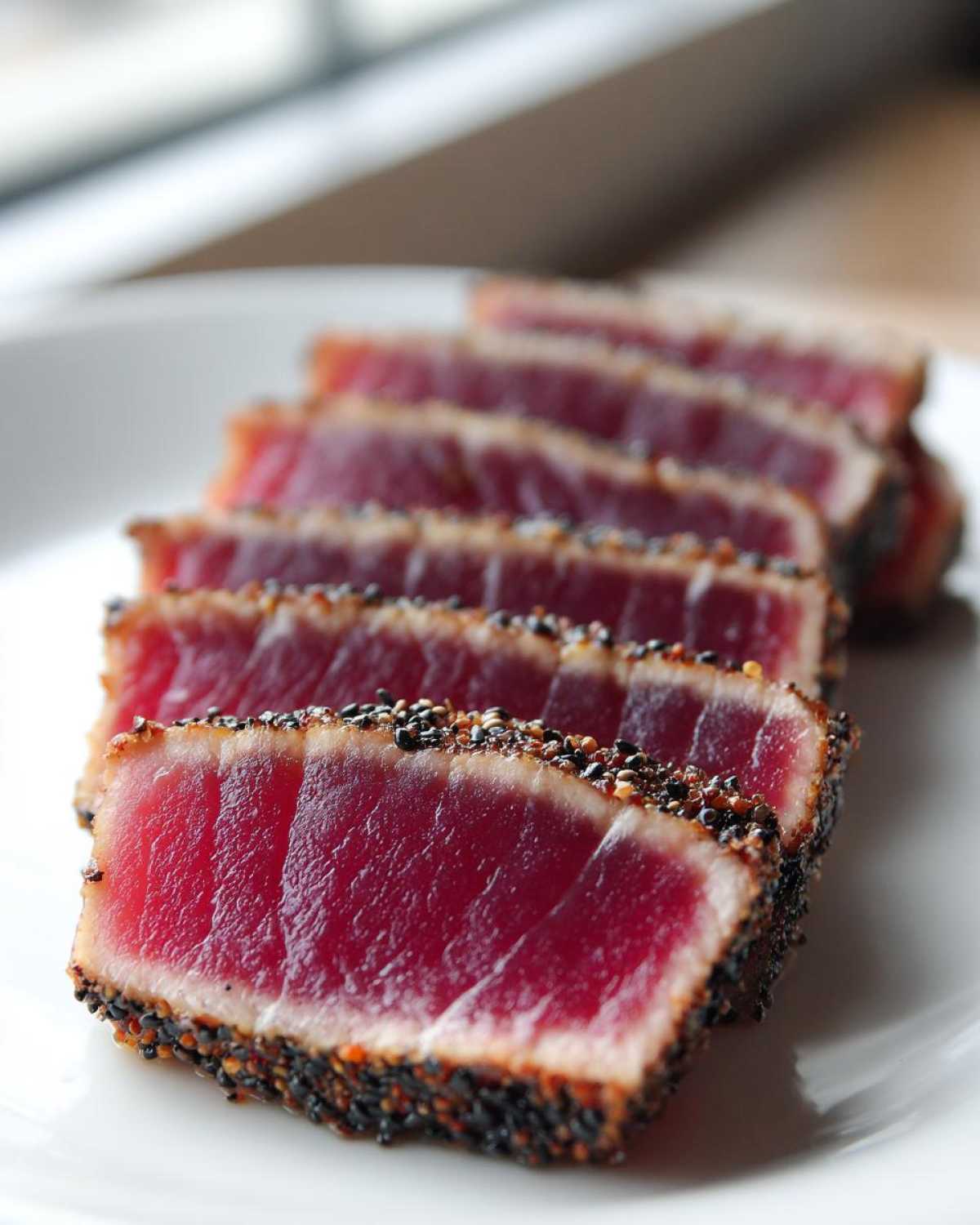
Before we start our rescue mission on the technique, we have to nail the ingredients. Because this is a quick seafood recipe that cooks so fast, the quality of your **Seared Ahi Tuna** is everything. You absolutely must start with top-tier fish. Don’t even bother if it’s not labeled as sushi grade! We use two beautiful 6-ounce yellowfin tuna steaks, making sure they are about an inch thick so we have enough room for that perfect, rare center.
For the flavor base, it’s simple but potent:
- 2 (6 ounce) sushi grade yellowfin tuna steaks, about 1 inch thick
- 2 tablespoons sesame oil
- 1 tablespoon soy sauce or tamari
- 1 teaspoon grated fresh ginger
- 1 clove garlic, minced
- 1/2 teaspoon black pepper
- 1/4 cup sesame seeds (mixed white and black, optional)
See? Nothing complicated. Just high-quality tuna soaking up incredible, simple Asian flavors for just a quick minute. That’s how we keep this a great healthy dinner option!
Step-by-Step Instructions for Flawless Seared Ahi Tuna
This is where the magic happens, and because this is such a quick seafood recipe, everything needs to move smoothly! I’ve taken the official steps and added the little things Clara noticed make the difference between a good plate and a wow moment. Following this sequence ensures you get a fantastic, healthy dinner on the table in under 20 minutes.
- First things first: Take those beautiful tuna steaks and pat them down. I mean aggressively dry them with paper towels. Seriously, if you skip this, Noah will haunt your kitchen! We need zero moisture on the surface for that sear.
- Whisk together your marinade ingredients in a tiny bowl—that’s your sesame oil, soy sauce, fresh ginger, minced garlic, and pepper. Keep it simple.
- Now, the marinade time is crucial. Pour it over the fish gently and let them hang out for exactly 10 minutes at room temperature. I need to warn you: DO NOT leave them longer! That soy sauce starts doing its thing, and you end up with fish that is partially cured, not perfectly rare.
- If you are using the sesame seeds, get them spread out on a plate now. Take the tuna out of that marinade, let the extra drips fall off (we don’t want scorching smoke from excess liquid hitting the pan), and then press each side gently into the seeds. Set the coated steaks aside and toss that leftover marinade; it’s done its job!
Preparing the Yellowfin Tuna Steaks
The drying process isn’t optional; it’s the foundation. Think of it like prepping a canvas before painting! After they are perfectly dry, the 10-minute marination is just long enough to impart that gorgeous Asian flavor, especially from the ginger and garlic. Any longer, and those salty, slightly acidic liquids start denaturing the protein on the surface. That means the outside starts turning opaque—the opposite of the beautiful crust we are aiming for! It’s a balancing act, and 10 minutes nails it every time.
Achieving the Ultimate Sear on Your Seared Ahi Tuna
Remember what Ben said? Get that skillet screaming hot! You want it shimmering, almost smoking. Carefully lay those crusted tuna steaks down—you should hear a ferocious sizzle immediately. That noise means success! I always watch the clock closely during searing. For rare—which is how I like my yellowfin tuna—it’s just 60 to 90 seconds per side. Anything over two minutes, and you’ll lose that beautiful rare center. Once you pull them out, the most important thing is to let them rest on a cutting board for a full 5 minutes. This lets those inner juices settle before you slice them thinly against the grain. Never skip the rest, even with a quick seafood recipe like this!
Tips for Making the Best Seared Ahi Tuna
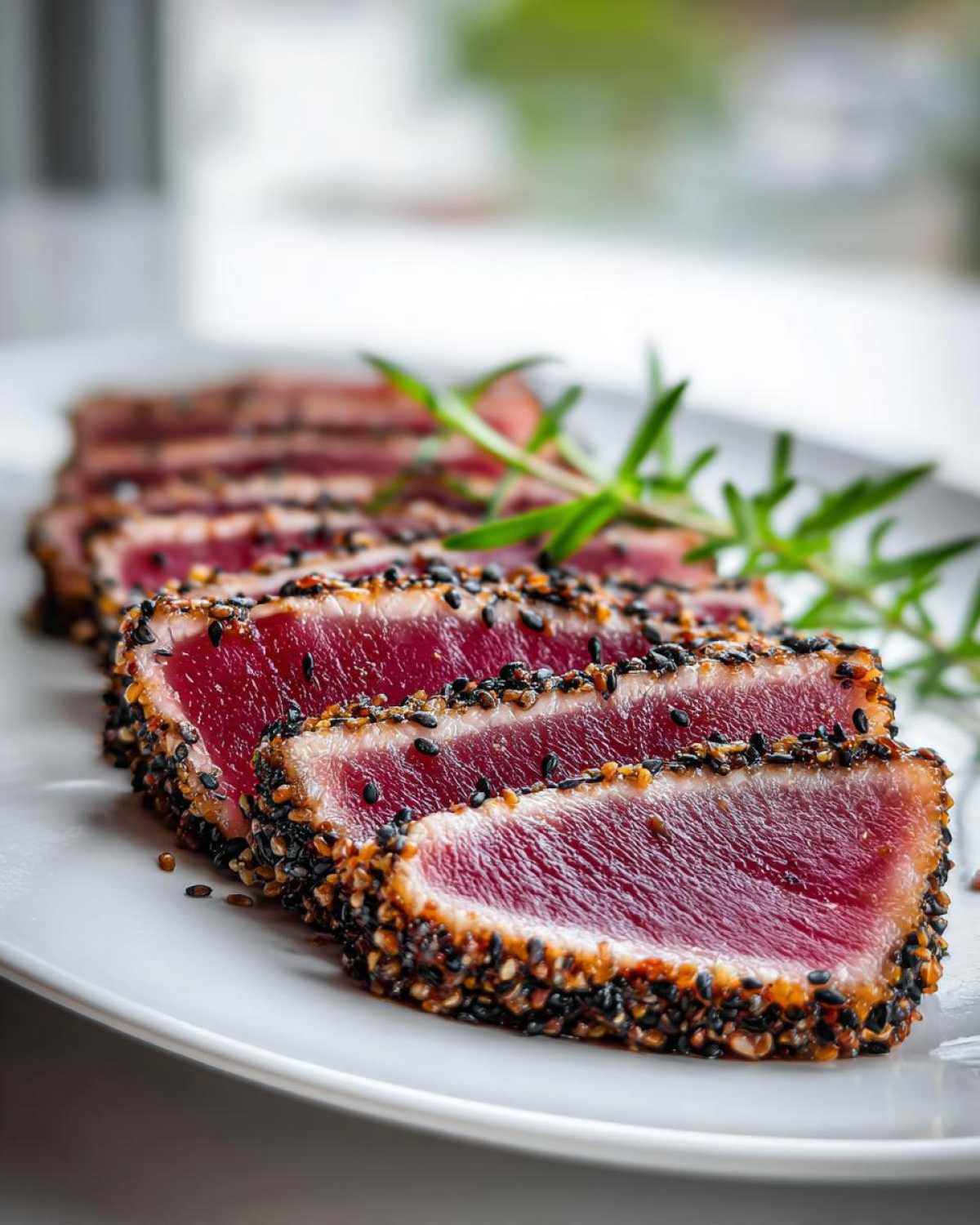
Even though our main technique is fantastic, sometimes little tweaks make a huge difference, especially when dealing with beautiful, fresh product. Noah says that understanding these variables really separates a good cook from an expert! For instance, if the idea of using sesame oil in the pan worries you, just swap it out for a high smoke point oil like avocado oil. That’s one of the approved fixes we noted for people who worry about the flavor profile changing too much.
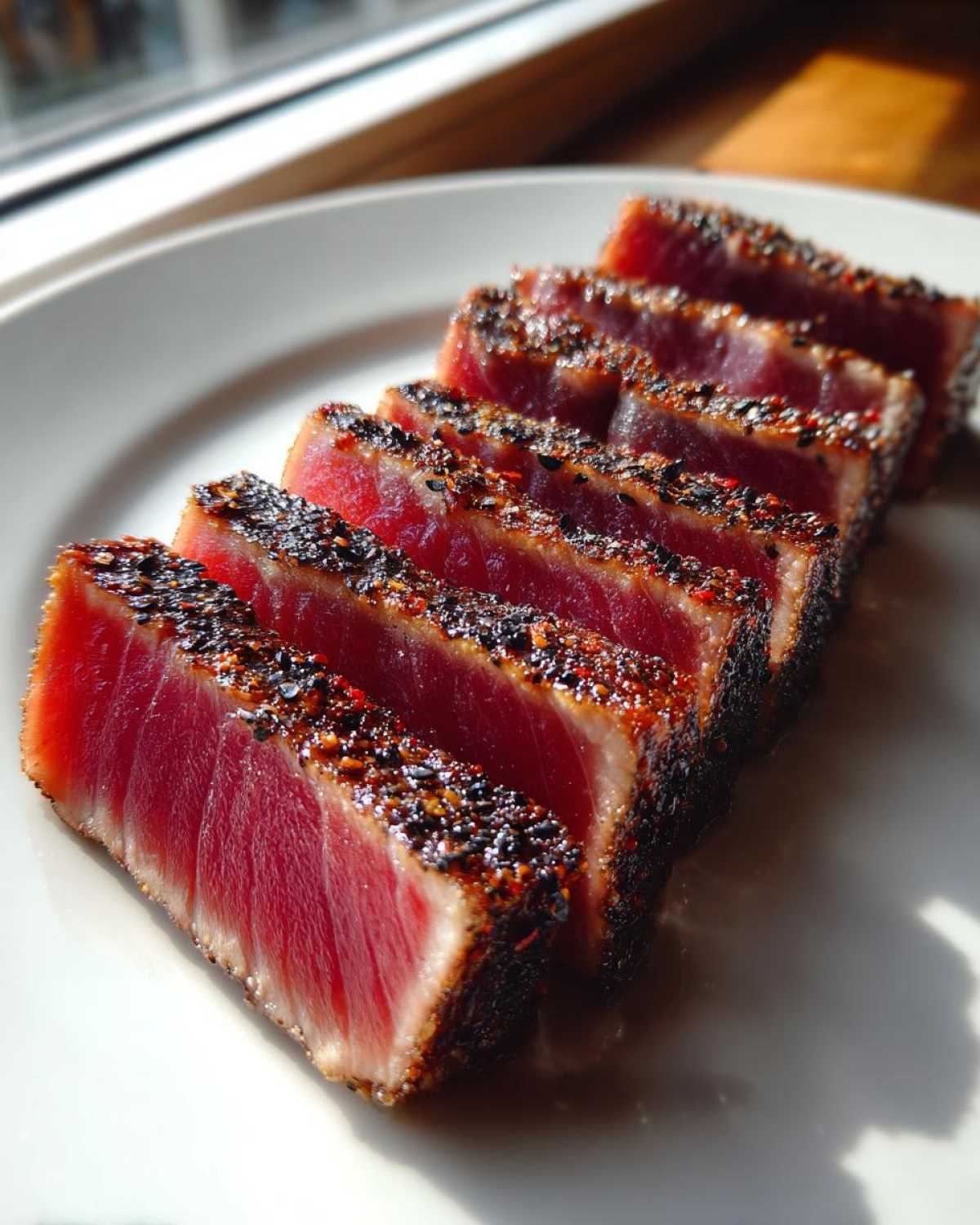
Also, if you’re looking for a crust that truly stops traffic, use the extra step we detailed: lightly dust the tuna with a little salt and pepper *before* you even dip it in the sesame seeds. That extra layer of seasoning locks in even more flavor right where the heat hits it first. Trust me, this makes your **gourmet tuna** steak pop even more.
If you want to see some other great tips floating around from our kitchen experiments, you can always check out the latest happenings over on our Savor And Pin Blog. We’re always sharing quick fixes and tricks we discover along the way!
Variations on the Asian Tuna Recipe
Okay, you’ve mastered the sear! Now we get to the fun part where Ben’s creative chaos shines—the toppings! While the sesame seeds are divine, they aren’t the only road to flavor town. If you’re feeling adventurous, try crushing up some pecans or walnuts really finely and using those instead. It gives the crust a nutty depth that’s completely different. It’s still a fantastic **Asian tuna recipe**, just slightly earthier!
Noah suggested grinding up some dried nori sheets (seaweed) into a fine powder and mixing that with salt and pepper for an umami blast. It gives you this incredible, dark green/black crust that looks super professional. Seriously, if you’re using a light dipping sauce, check out the incredible notes we developed for our Chili Garlic Noodles—a tiny drizzle of that goes perfectly with this tuna!
Serving Suggestions for Your Seared Ahi Tuna
So you have this incredible, perfectly crusted **Seared Ahi Tuna** steak sitting on your board—what are you going to serve it with? Since this is already such an elegant meal, I always keep the sides light so the fish remains the star. Simple steamed rice or lightly dressed cucumber salad works beautifully to balance the richness.
If you want something creamy but still bright, try skipping the standard potatoes and whipping up some wasabi mashed potatoes; the kick is amazing with the soy-ginger marinade. And don’t forget that dipping sauce! A simple blend of soy, rice vinegar, and a tiny bit of sugar works wonders, or you can check out how well our citrus pairs with starchier sides when we talk about Lemon Garlic Roasted Potatoes. Keep it fresh, keep it simple!
Storage and Reheating Instructions for Leftover Seared Ahi Tuna
Okay, here’s the tough love part: this glorious **Seared Ahi Tuna** is intensely best eaten immediately after it rests. It relies on that rare center being just barely warmed through! If you have leftovers—maybe you were too generous with portions—you need to speed-chill them in the fridge right away in an airtight container. Seriously, don’t let that beautiful fish hang out on the counter.
Now, while you *can* eat it cold straight from the fridge, I have to tell you *not* to try reheating it. Microwaving tuna turns it into rubbery, grey disappointment, and no one wants that culinary disaster! Instead, slice those cold leftovers thinly and toss them right into a big, bright salad the next day. It makes for such an easy, healthy dinner side!
Frequently Asked Questions About Sushi Grade Tuna
Whenever we share a recipe that needs ultra-fresh ingredients, I always get so many great questions back from you all! It’s smart to check in on safety and quality, especially when you’re working with **sushi grade tuna** like this to make your **Seared Ahi Tuna**. Here are the big ones that always pop up in our comments section over at Savor And Pin.
Is it safe to eat raw yellowfin tuna?
This is the most important question, and the answer is ‘Yes, if you buy the right thing!’ The term ‘sushi grade’ isn’t officially regulated by the FDA, so you have to trust your fishmonger. What it *means* is that the **yellowfin tuna** has been handled and, most importantly, flash-frozen under specific FDA guidelines to kill any potential parasites. You cannot just buy any fresh tuna from the counter and eat it raw; it has to be specifically handled for raw consumption. Ask them directly: “Is this fish safe to eat raw?” If they hesitate, walk away. We only use the very best for this!
What internal temperature should Seared Ahi Tuna reach?
This is where the art comes in! Unlike cooking chicken or beef all the way through, for a perfect rare, you aren’t really aiming for a temperature; you are aiming for *time* and *crust*. We sear for 60 to 90 seconds per side. If you use a thermometer, you are looking for a center temperature that is just barely warm—maybe 90°F to 100°F at most. The goal isn’t to cook the inside; the goal is to get that crust so searing hot that it barely kisses the center, leaving that beautiful, cool, ruby-red color inside where the flavor lives. If it’s grey, you cooked it too long!
Can I use frozen tuna for this recipe?
If you buy it frozen, you absolutely must thaw it correctly. Never thaw beautiful fish like this on the counter at room temperature, or you risk the exterior getting warm while the inside is still icy—that totally ruins the searing process. The best way is to put the vacuum-sealed package directly into a bowl of very cold water. Change the water every 20 minutes until it’s fully thawed. Once thawed, pat it bone-dry immediately and get it marinating for its **quick seafood recipe** cook time. If you can buy it fresh from a trusted source, that’s always my first choice, but proper thawing works in a pinch!
Nutritional Snapshot of This Healthy Dinner
I know some of you are looking at this delicious, fast **Seared Ahi Tuna** and wondering how it fits into your routine. Well, I’ve got great news for you! Because we rely on lean **yellowfin tuna** and skip heavy sauces, this comes out as a genuinely fantastic **healthy dinner**. Ben loves that it’s high in protein, and Noah appreciates that the fats are mostly the good kind.
Here is the quick rundown based on the ingredients listed above for one serving. Remember, this is just an estimate—if you add extra butter to the pan, these numbers will shift slightly! But they give you a great idea of why this is such a lean, excellent choice for a weeknight meal:
- Calories: 250
- Protein: 28g (Wow! That’s huge!)
- Fat: 14g (Mostly healthy fats, mind you!)
- Carbohydrates: 4g
- Sodium: 350mg (This goes up if you use extra salty soy sauce, so watch that!)
There you have it! A flavorful, restaurant-worthy dish that clocks in under 300 calories. It proves you don’t need fussy, broken recipes to eat incredibly well—you just need the right technique!
PrintPerfectly Seared Ahi Tuna Steaks
Learn the simple technique to get a beautiful crust on sushi grade yellowfin tuna while keeping the center perfectly rare. This quick seafood recipe is healthy and flavorful.
- Prep Time: 10 min
- Cook Time: 4 min
- Total Time: 19 min
- Yield: 2 servings
- Category: Dinner
- Method: Pan Searing
- Cuisine: Asian
- Diet: Low Fat
Ingredients
- 2 (6 ounce) sushi grade yellowfin tuna steaks, about 1 inch thick
- 2 tablespoons sesame oil
- 1 tablespoon soy sauce or tamari
- 1 teaspoon grated fresh ginger
- 1 clove garlic, minced
- 1/2 teaspoon black pepper
- 1/4 cup sesame seeds (mixed white and black, optional)
Instructions
- Pat the tuna steaks completely dry using paper towels. This step is key for a good sear.
- In a small bowl, whisk together the sesame oil, soy sauce, ginger, garlic, and black pepper to create the marinade.
- Place the tuna steaks in a shallow dish and pour the marinade over them. Turn to coat evenly. Let the tuna marinate for 10 minutes at room temperature. Do not marinate longer, as the soy sauce can begin to ‘cook’ the fish.
- If using sesame seeds, spread them out on a plate. Remove the tuna from the marinade, letting excess drip off, and gently press both sides of each steak into the seeds to coat them evenly. Discard the remaining marinade.
- Heat a heavy-bottomed skillet, such as cast iron, over high heat until it is very hot, almost smoking.
- Carefully place the coated tuna steaks into the hot, dry skillet. You should hear an immediate, strong sizzle.
- Sear the tuna for 60 to 90 seconds per side for rare, or up to 2 minutes per side for medium-rare. You are looking for a dark, crisp crust.
- Remove the tuna from the pan immediately. Let the steaks rest on a cutting board for 5 minutes before slicing.
- Slice the tuna against the grain into 1/4-inch thick pieces. Serve right away.
Notes
- For the best results, use a high smoke point oil like avocado oil if you prefer not to use sesame oil for searing.
- If you want a stronger crust, you can lightly dust the tuna with a mixture of salt and pepper before searing, in addition to the sesame seed coating.
- This gourmet tuna pairs well with a simple soy-ginger dipping sauce.
Nutrition
- Serving Size: 1 steak
- Calories: 250
- Sugar: 1
- Sodium: 350
- Fat: 14
- Saturated Fat: 2
- Unsaturated Fat: 12
- Trans Fat: 0
- Carbohydrates: 4
- Fiber: 1
- Protein: 28
- Cholesterol: 65