

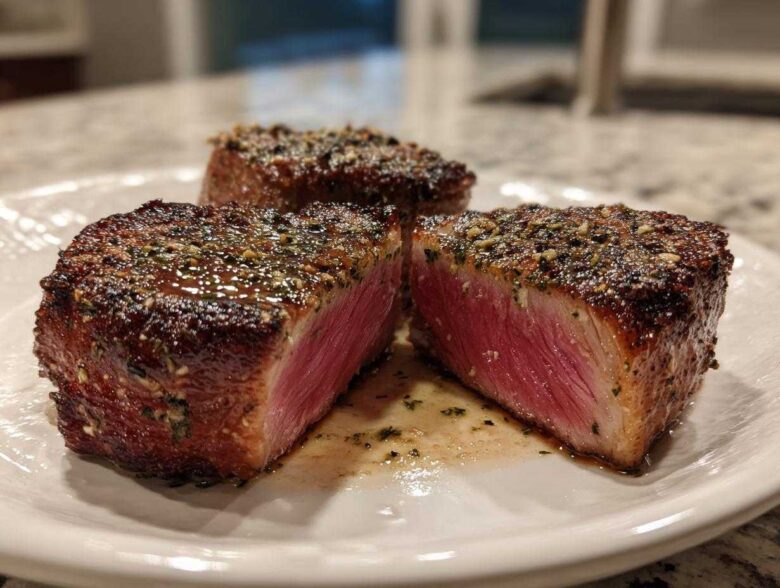
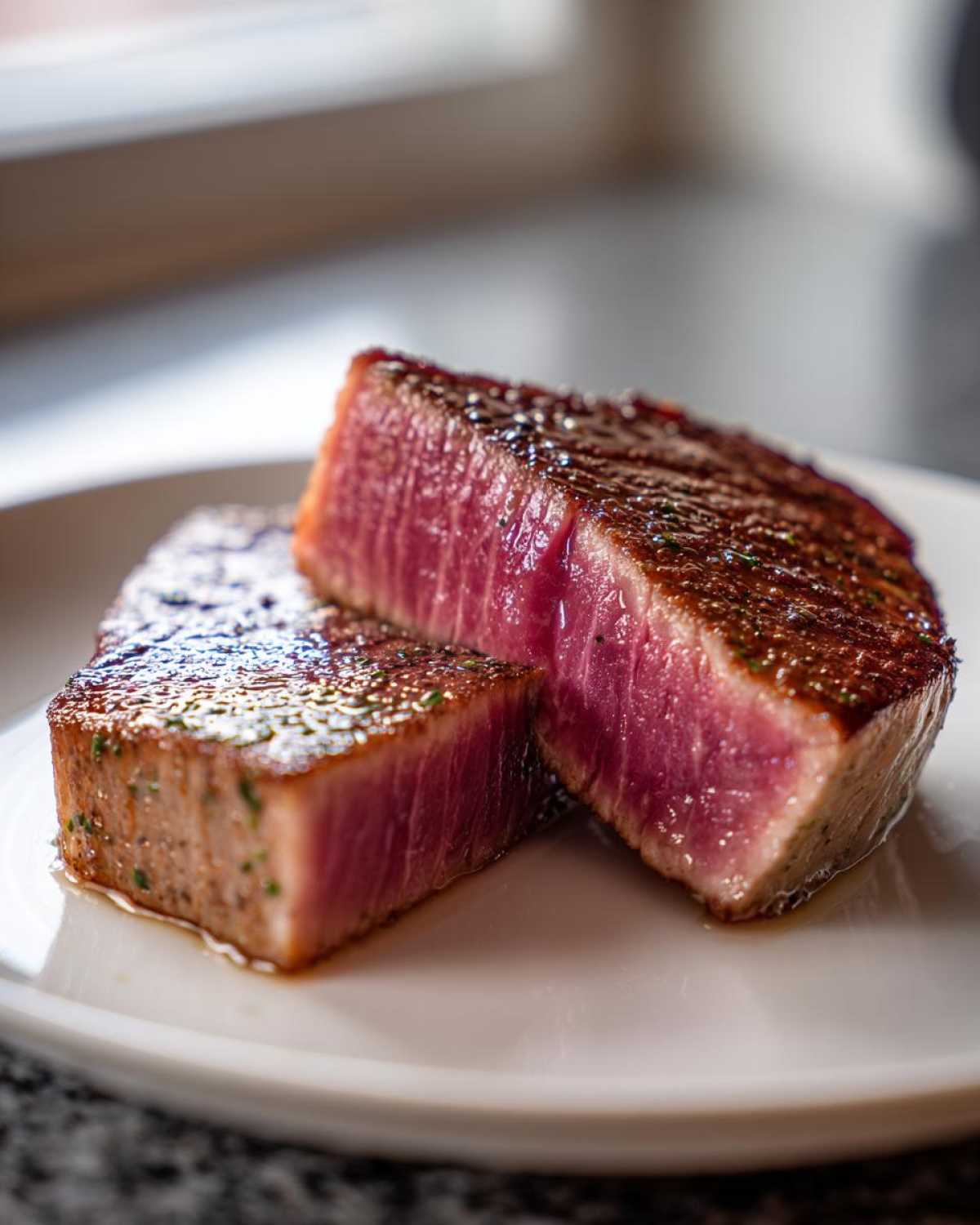
I used to think that beautifully seared tuna steak, with that dark, savory crust giving way to a cool, buttery center, was something only fancy restaurants could pull off. Seriously, I messed up so many beautiful cuts of fish trying to get that sear right! But trust me, once you nail the technique—which you absolutely will with this recipe—you won’t bother ordering it out anymore. This pan-seared **tuna steak** delivers that restaurant-quality magic in under fifteen minutes total. It’s my go-to when I need an impressive, healthy seafood dinner fast.
The secret, like with most quick seafood recipes, is all about high heat and timing. We’re keeping things simple here so you can feel confident serving this up any night of the week. If you’re looking for speedy ways to elevate your weeknight menu, check out our collection of quick seafood recipes—they’re lifesavers!
Why This Pan-Seared Tuna Steak Recipe Works So Well
Honestly, this recipe flies off the plate every time it hits our table, and here’s the lowdown on why it’s such a winner. It hits all the right notes without needing hours of prep work. If you’ve struggled getting that perfect texture before, this is the magic bullet.
- It’s Lightning Fast: We are talking about a total time commitment under fifteen minutes. Yes, seriously! It’s the perfect answer when you need an “easy tuna dinner” but refuse to settle for anything less than amazing.
- That Perfect Texture: We aim for that coveted outside crust—crisp, well-seasoned, and slightly caramelized—paired with a cool, tender, flaky center. If you want more secrets on keeping your fish tender, have a look at my favorite tender tuna steak tips.
- Flavor Bomb Finish: It’s not just about the sear; it’s about what happens next. That rich, savory garlic herb butter melts right over the top, making this a genuinely restaurant-style result. It tastes way more complicated than it actually is!
Ingredients for Your Perfect Tuna Steak
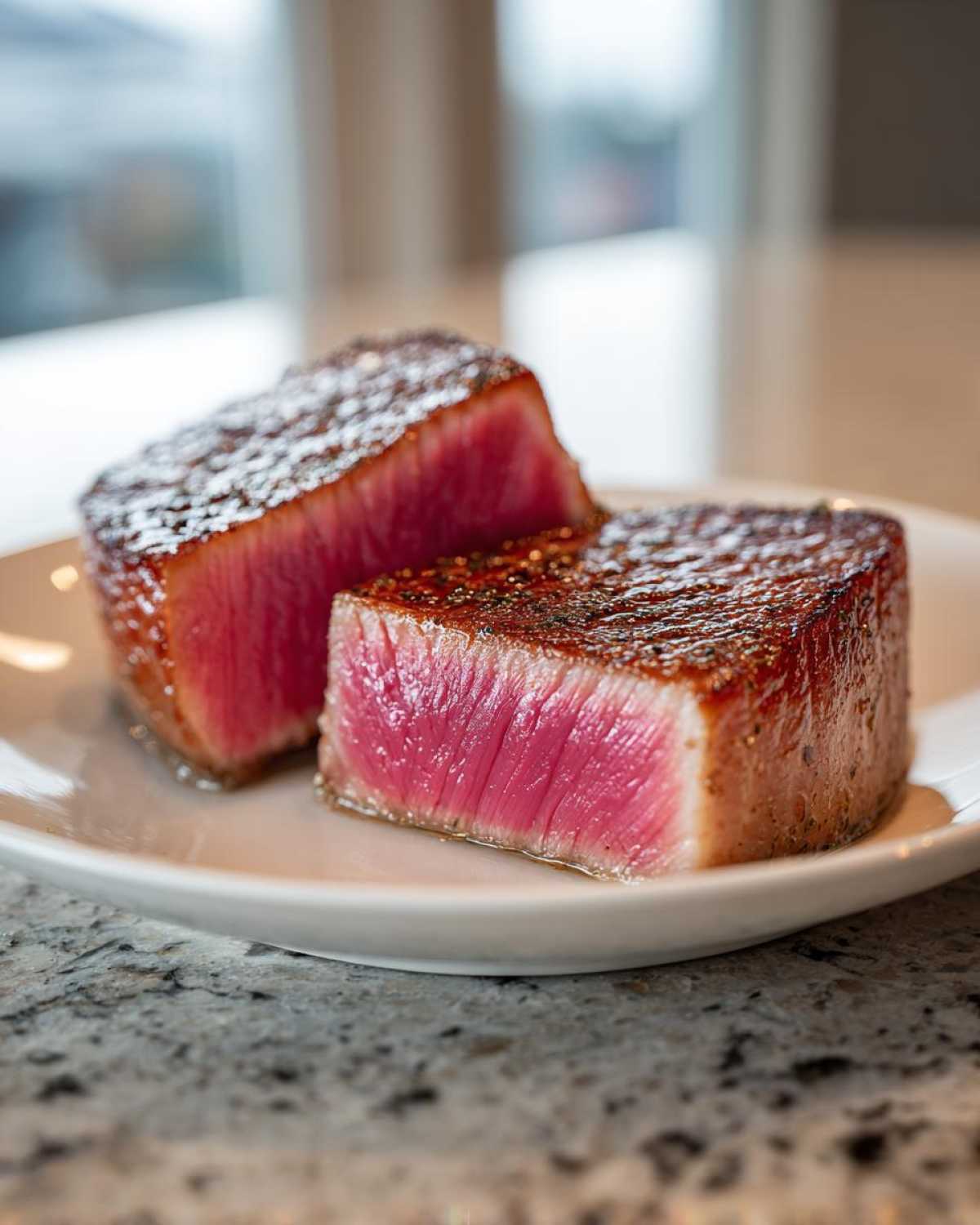
Okay, let’s talk ingredients. Since we are cooking this tuna steak so quickly, the quality of the fish itself really shines through. Don’t skimp here! You absolutely want to source the best quality you can find—ideally, look for sushi-grade or sashimi-grade tuna steaks. That high quality means you can cook it rare without any worries, which is totally the goal for that perfect, tender texture.
You’ll need two steaks, roughly 6 ounces each, and make sure they are about an inch thick. That thickness helps achieve the beautiful sear without overcooking the middle too fast. Here’s what else you need to gather up for the main event:
- Two (6-ounce) **tuna steaks**, aim for about 1 inch thick, please!
- 1 tablespoon of olive oil—use one with a higher smoke point, like regular olive oil, not extra virgin for this part.
- 1/2 teaspoon of salt.
- 1/4 teaspoon of black pepper.
- 2 tablespoons of unsalted butter.
For the Garlic Herb Butter
This is the flavor star, folks! It’s so simple, but the fresh elements make all the difference. Don’t reach for that dried parsley jar; I beg you! Fresh herbs here are non-negotiable for that bright, clean finish.
- 2 cloves of garlic, finely minced. Make sure they are fresh—that sharp scent is what you want!
- 1 tablespoon of fresh parsley, chopped up nice and fine.
How to Prepare Your Tuna Steak: Step-by-Step Instructions
Alright, deep breaths! This is the part where most people panic, but I promise this is simple. The key to a great seared tuna steak is preparation and heat—don’t rush the setup! First things first: grab some paper towels. You need to pat those beautiful tuna steaks completely dry. Seriously, water is the enemy of a good sear; it steams the fish instead of cooking it. Once they’re bone dry, season both sides evenly with your salt and pepper. Don’t be shy, but don’t overdo it either!
Next, get your heavy skillet—cast iron if you have it—on the stove over medium-high heat. We want this thing ripping hot. You need the oil shimmering a bit before that fish even touches the pan. We cook these steaks fast, usually just a couple of minutes per side for rare, so everything has to be ready to go.
Achieving the Ultimate Tuna Steak Sear
Carefully place the seasoned tuna into that hot, shimmering oil. Here is my number one rule: Do not touch it for the first 1.5 to 2 minutes. Resist the urge to peek! You are building a crust, and moving it early guarantees a pale, sad exterior. When you can see that gorgeous brown crust creeping up the side, you know it’s time to move on to the flavor section.
Basting with Garlic Butter
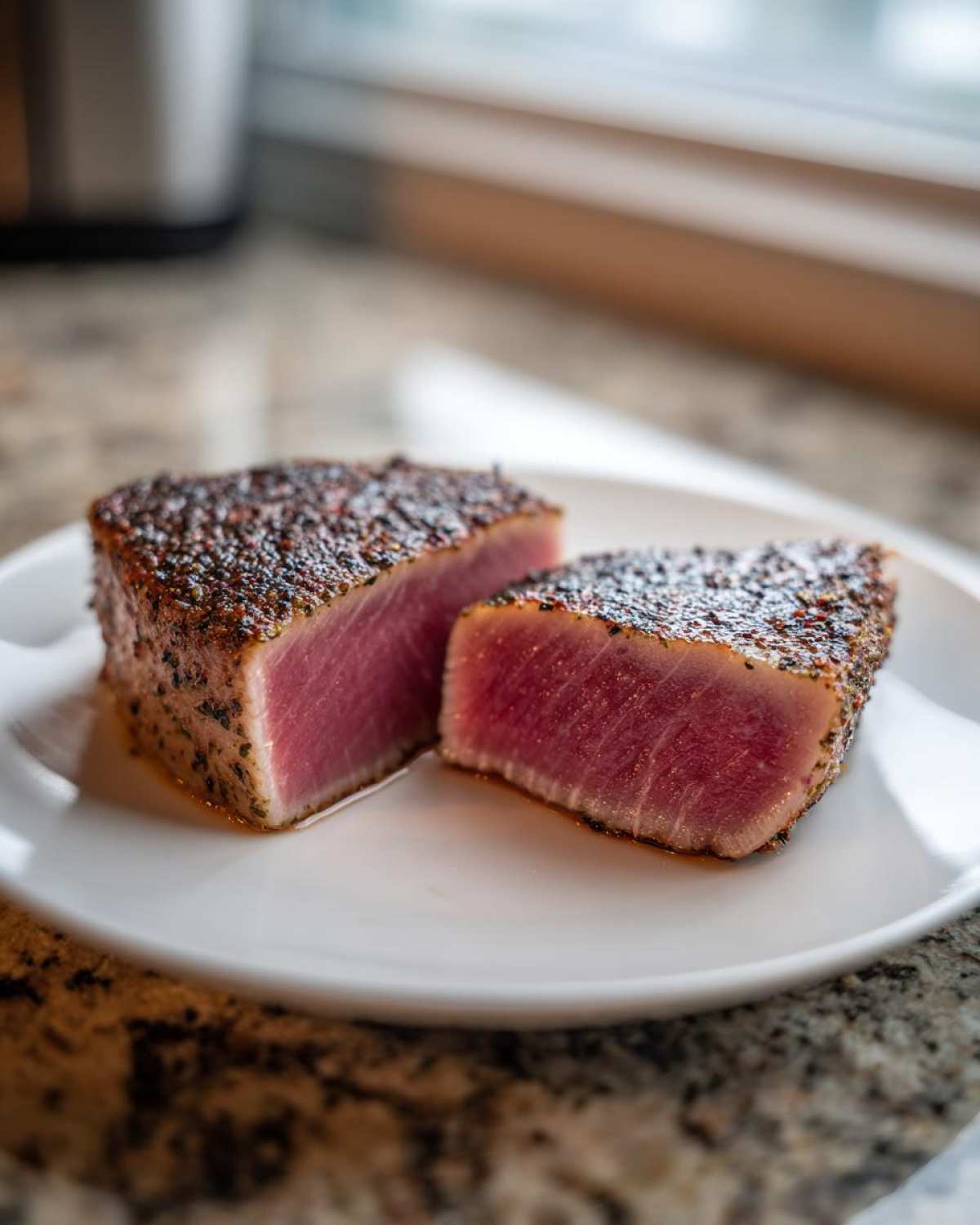
Flip those steaks! That side should look perfect. Immediately drop your two tablespoons of butter right into the pan next to the fish. As it melts and foams up, tilt the pan slightly and use a spoon to scoop that incredible butter right over the top of the tuna steak repeatedly for about 60 seconds. Toss in your minced garlic right at the end—30 seconds only! You just want it fragrant, not burnt!
When the butter starts smelling amazing and the fish looks done on the outside, pull that pan off the heat immediately. Let the tuna steaks rest on a cutting board for about three minutes before you slice them or serve them whole. That little rest is essential—it lets the internal juices settle in, guaranteeing you that tender tuna steak we’re aiming for. It’s an easy tuna dinner that tastes like you spent hours!
Tips for a Restaurant Style Tuna Steak Every Time
If you want that amazing restaurant style tuna experience at home, it really comes down to three little secrets I learned through trial and error. Most people mess up by cooking it too long. Tuna steak is best when served rare to medium-rare; think of it like a super premium steak! You really want the internal temperature to hit about 115°F for rare, or maybe up to 125°F if you’re nervous, but honestly, stick closer to rare.
My biggest warning? Do not, under any circumstances, overcrowd the pan. I learned this the hard way when I tried to cook four steaks in my 10-inch skillet. The second you add too much cold fish, the oil temperature plummets, and instead of searing, you end up steaming those gorgeous steaks! They get grey and chewy, and then all that hard work on the flavor profile goes to waste. Trust me, cook them one or two at a time so that pan stays blazing hot the whole time.
And remember, resting is non-negotiable! Just like a good piece of beef, letting that tuna sit for three minutes before slicing lets all those juices redistribute. They won’t flood your cutting board, and you’ll get a more consistently tender bite throughout the whole fillet. It’s those tiny steps that separate a home cook from a chef, even when making a super quick how to cook tuna steak dinner!
Flavor Variations for Your Tuna Steak Marinade
While that garlic herb butter is sheer perfection, I know some of you are just dying to try a different flavor profile on your tuna steak marinade! Don’t worry; this recipe is super adaptable. That rich seafood flavor stands up beautifully to bold things, so we can easily switch gears from herbaceous to Asian-inspired in a snap.
If you’re looking for something savory and salty instead of rich and buttery, you only need to swap out the finishing step. I think it’s fun to keep a few different spice rubs stocked so you can tailor your meal to what you’re craving that day. It’s still a lightning-fast low carb tuna meal, just with a completely different vibe!
Quick Soy Ginger Tuna Steak Glaze
This is where you skip adding the butter and garlic to the pan at the end, remember? Instead, when you flip the steak and it’s cooking on the second side, whisk together 2 tablespoons of soy sauce with about 1 teaspoon of really fresh, grated ginger. Pour that mixture right into the hot pan during that last minute of cooking. It will sizzle and reduce almost instantly into a beautiful, thin glaze that coats the fish perfectly. Wow, the smell alone is incredible!
Serving Suggestions for Your Easy Tuna Dinner
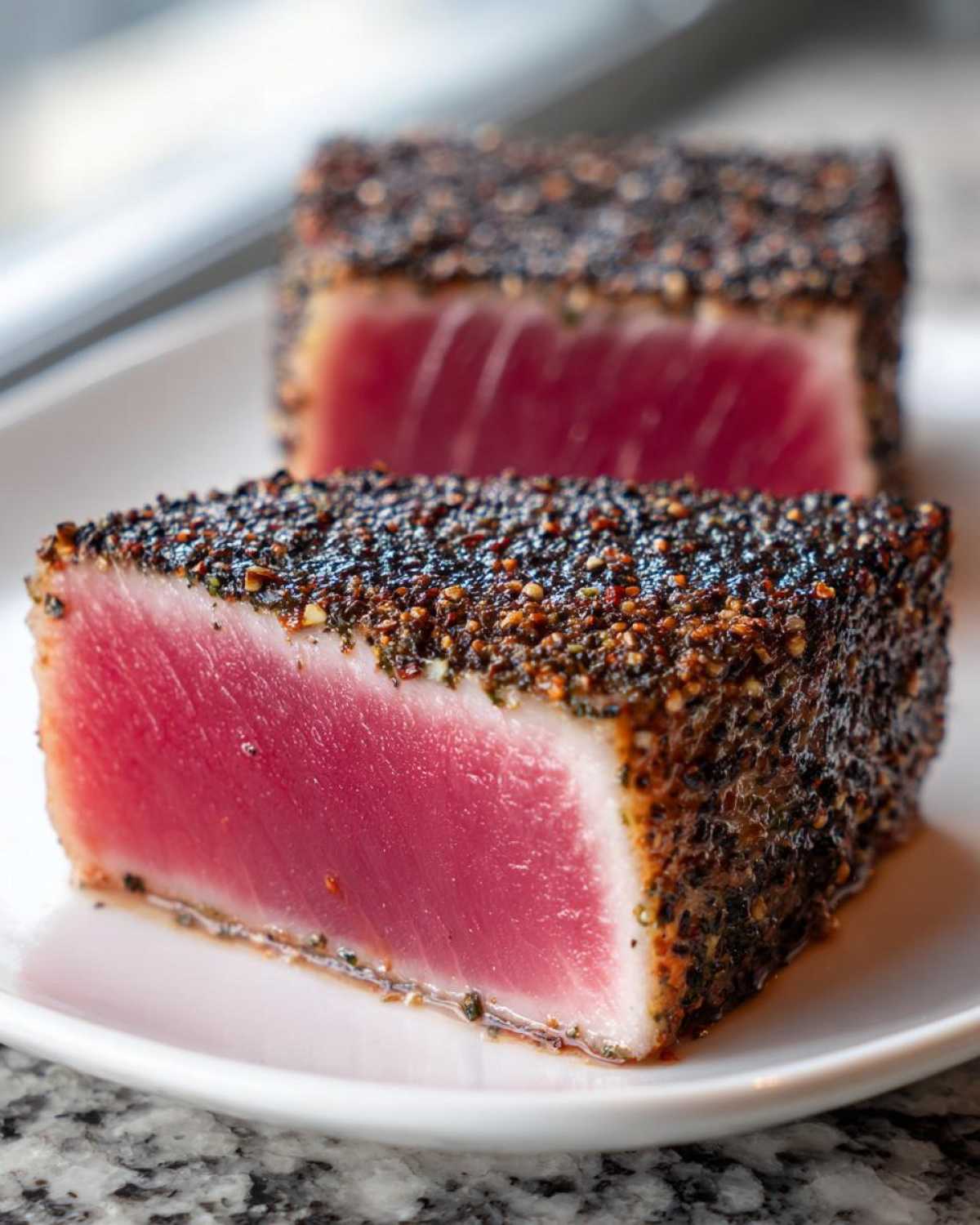
Since this perfect pan-seared tuna steak cooks so fast and is already so rich from that garlic butter, you don’t want to weigh it down with heavy sides, right? We need clean, quick companions that let the fish shine through. I always default to something green that I can toss in the oven while the tuna is resting.
Asparagus is fantastic—just a quick toss in olive oil and salt. Or, if you want something a bit cozier that still feels light, try my recipe for lemon garlic roasted potatoes; they bake quickly enough to be ready right when the tuna is done resting. A little mound of fluffy jasmine rice soaked in the leftover pan juices also makes for a heavenly, easy tuna dinner!
Storage and Reheating Instructions for Leftover Tuna Steak
If you manage to have any leftovers—which is rare in my house, believe me—you need to treat that cooked tuna steak gently. Remember, we aimed for rare to medium-rare, and heat is the enemy of that gorgeous texture once it’s off the pan!
First, let the steak cool down a bit, and then wrap it tightly, either in plastic wrap or pop it into an airtight container. You should safely store leftovers in the fridge for about two days, max. Any longer, and the quality really starts to drop off, which is sadly true for most perfectly seared fish.
Now, for reheating: proceed with caution! I actually hate reheating seared tuna because it always pushes it toward well-done in the center, making it tough. My absolute favorite way to eat leftovers is cold! Slice it thinly against the grain and toss it over a crisp salad—maybe that’s a Mediterranean mix or just some mixed greens with a light vinaigrette. Suddenly, you have a brand new, healthy tuna meal!
If you absolutely must reheat it hot, use the absolute lowest power setting on your microwave for just ten to fifteen seconds at a time. Seriously, watch it like a hawk! Another trick that works better is briefly dipping the slices into hot (but not boiling) broth or water just to warm them through before serving. That little bit of steam helps keep things moist. But if you want the best experience, eat it cold!
Frequently Asked Questions About Cooking Tuna Steak
I get so many questions about cooking fish, and honestly, for something that cooks this fast, precision matters! I wanted to cover a few things I hear all the time so you can feel totally confident making this ahi tuna recipe. Don’t stress about the heat—just follow the dry-the-fish rule and you’re golden!
Can I grill the tuna steak instead of pan-searing?
Oh yeah, you absolutely can grill it! If you prefer that smoky flavor, go for it. The main thing is that your grill has to be screaming hot, just like our skillet needs to be. Since grills often cook a little hotter and faster on the outside, you might need to cut that cooking time down by about 30 seconds per side. Keep a close eye on it!
What internal temperature means a perfect rare tuna steak?
This is all about preference, but for that truly beautiful, almost translucent pink center that melts in your mouth—that’s what I love in a great seared tuna steak—you are looking for an internal temperature close to 115°F right when you pull it off the heat. It will creep up just a little more while it rests, which is perfect. If you go much higher than 125°F, it starts firming up too much.
Is this considered a healthy tuna recipe?
It totally is! This is one of my favorites when I’m looking for something super quick but also clean. Tuna steak is packed with lean protein, and since we aren’t coating it in heavy breading or making a thick, creamy tuna steak sauce, the main ingredients are just the fish and a little healthy fat from the olive oil and butter. It naturally fits right into that high-protein, low-carb lifestyle. It’s a fantastic healthy tuna recipe!
Estimated Nutritional Information for This Tuna Steak Recipe
I always find it helpful to see the big picture of what we’re eating, especially when balancing protein intake! This simple garlic butter preparation keeps the numbers looking really friendly for a quick seafood dinner. Remember, because this recipe focuses on high-quality fish and very simple additions, it naturally falls into the high-protein, naturally low-carb category. That’s a win-win, right?
The values listed below are based on one serving (one steak) using the ingredients specified, so if you decide to double up on that delicious garlic butter sauce, keep that in mind! Also, please remember this is an estimate. If you use a thicker steak or different oil, these numbers can shift around a little bit. This is just a guideline for what you can expect from this simple, clean healthy tuna recipe.
- Serving Size: 1 steak
- Calories: 250
- Protein: 33g
- Fat: 12g
- Saturated Fat: 6g
- Carbohydrates: 0g
- Sugar: 0g
- Cholesterol: 80mg
See? Thirty-three grams of protein without a big fuss! It’s one of the best ways to power through the week feeling full but not weighed down. Enjoy!
PrintPerfect Pan-Seared Tuna Steak with Garlic Herb Butter
Learn how to cook tuna steaks perfectly by searing them quickly to achieve a crisp exterior and a tender, rare center using a simple garlic herb butter.
- Prep Time: 5 min
- Cook Time: 5 min
- Total Time: 13 min
- Yield: 2 servings
- Category: Dinner
- Method: Pan Searing
- Cuisine: American
- Diet: Low Fat
Ingredients
- 2 (6-ounce) tuna steaks, about 1 inch thick
- 1 tablespoon olive oil
- 1/2 teaspoon salt
- 1/4 teaspoon black pepper
- 2 tablespoons unsalted butter
- 2 cloves garlic, minced
- 1 tablespoon fresh parsley, chopped
Instructions
- Pat the tuna steaks completely dry with paper towels. Season both sides evenly with salt and pepper.
- Heat the olive oil in a heavy, oven-safe skillet (cast iron works best) over medium-high heat until the oil shimmers.
- Carefully place the tuna steaks in the hot skillet. Sear for 1.5 to 2 minutes without moving them until a deep brown crust forms.
- Flip the steaks. Immediately add the butter to the skillet. As the butter melts, tilt the pan and spoon the melted butter over the tops of the steaks for about 1 minute.
- Add the minced garlic to the melted butter in the pan. Cook for 30 seconds until fragrant.
- Remove the skillet from the heat. Transfer the tuna steaks to a cutting board. Spoon the garlic butter and herbs over the steaks.
- Let the steaks rest for 3 minutes before slicing against the grain or serving whole.
Notes
- For a medium-rare center, aim for an internal temperature of 125°F. For rare, aim for 115°F.
- If you prefer an Asian flavor, substitute the butter/garlic/parsley step with 2 tablespoons of soy sauce mixed with 1 teaspoon of grated fresh ginger, added during the last minute of cooking.
- Do not overcrowd the pan; cook steaks one or two at a time to maintain high heat for a proper sear.
Nutrition
- Serving Size: 1 steak
- Calories: 250
- Sugar: 0
- Sodium: 300
- Fat: 12
- Saturated Fat: 6
- Unsaturated Fat: 6
- Trans Fat: 0
- Carbohydrates: 0
- Fiber: 0
- Protein: 33
- Cholesterol: 80