Amazing 4-Step Pork Chops That Finally Stay Juicy
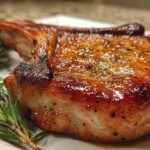
Follow these steps to cook pork chops that remain incredibly juicy and tender every time. We focus on technique to defeat dry meat.
- Prep Time: 15 minutes
- Cook Time: 15 minutes
- Total Time: 4 hours 30 minutes (includes mandatory brining time)
- Yield: 4 servings
- Category: Main Course
- Method: Sear and Baste
- Cuisine: American
- Diet: Low Fat
Ingredients
Scale
- 4 Bone-in Pork Chops (about 1 inch thick)
- 1/4 cup Kosher Salt
- 2 tablespoons Brown Sugar
- 1 teaspoon Black Peppercorns, freshly cracked
- 2 sprigs Fresh Rosemary
- 4 cloves Garlic, smashed
- 2 tablespoons Olive Oil
- 2 tablespoons Unsalted Butter
Instructions
- Create the brine: Dissolve salt and brown sugar in 4 cups of hot water. Add 1 cup of ice water to cool the mixture quickly.
- Submerge the pork chops in the cooled brine. Place in the refrigerator for at least 4 hours, up to 12 hours. This step locks in moisture.
- Remove chops from brine. Discard brine. Pat the pork chops completely dry using paper towels. Drying the surface is key for a good sear.
- Season the dry chops generously with black pepper. Do not add more salt, as the brine has already seasoned them.
- Heat olive oil in a heavy-bottomed skillet (cast iron works best) over medium-high heat until shimmering.
- Carefully place the pork chops in the hot skillet. Sear for 3 to 4 minutes without moving them until a deep brown crust forms.
- Flip the pork chops. Reduce the heat to medium. Add the butter, rosemary sprigs, and smashed garlic to the pan.
- Tilt the pan slightly and use a spoon to continuously baste the melting butter over the chops for 3 to 5 minutes.
- Check the internal temperature with a meat thermometer. Remove the chops from the pan when they reach 140 degrees Fahrenheit.
- Transfer the chops to a cutting board. Tent loosely with foil. Let them rest for 10 minutes before serving. The temperature will rise to a safe 145 degrees while resting, keeping them juicy.
Notes
- Bone-in chops retain more moisture than boneless cuts.
- Do not skip the resting period; this allows juices to redistribute throughout the meat.
- Use a meat thermometer. Guessing leads to dry pork.
- If your chops are thinner than 1 inch, reduce the searing and basting times slightly.
Nutrition
- Serving Size: 1 pork chop
- Calories: 350
- Sugar: 1g
- Sodium: 900mg (varies based on brine time)
- Fat: 18g
- Saturated Fat: 6g
- Unsaturated Fat: 12g
- Trans Fat: 0g
- Carbohydrates: 1g
- Fiber: 0g
- Protein: 40g
- Cholesterol: 110mg
Find it online: https://savorandpin.com/the-pork-chops-that-finally-stay-juicy/