

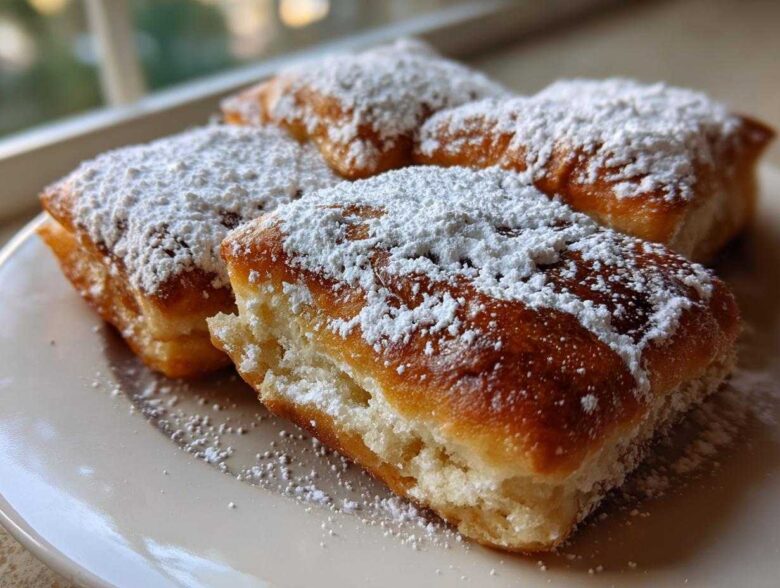
There is truly nothing in this world that beats the smell of hot, fresh fried dough dusted with a mountain of snow-white powdered sugar. When I first tried making Parisian-style beignets, I thought I needed fancy equipment or some intimidating pastry degree. Nope! I ended up with dense little hockey pucks more times than I care to admit.
But I finally cracked the code, and trust me, you can too! This recipe changed everything for me. Forget the complicated stuff; we are making Easy French Beignets (Authentic and Delicious) right here, right now. We use a simple yeast dough that does most of the heavy lifting for you. You just need to give it a little time to rest, and you’ll be rewarded with pillowy, light bites that taste exactly like they came straight from a traditional French café. If you love those decadent desserts, check out my recipe for churro cheesecake bars—but these beignets, they are the easiest path to the best homemade beignets, period!
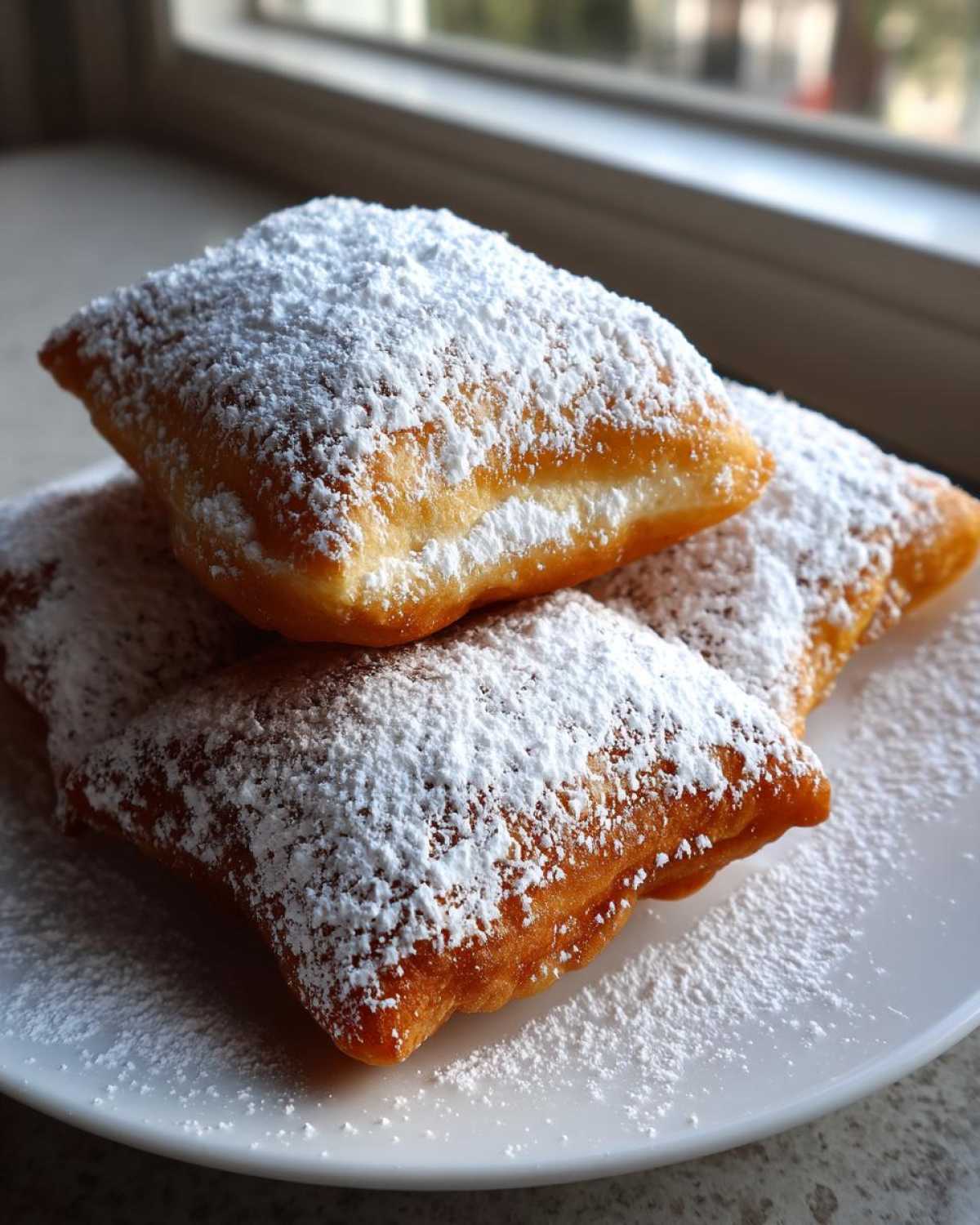
Why You Will Love Making Easy French Beignets (Authentic and Delicious)
If you’re looking for the absolute *easiest* way to get that signature puff and light texture, this is it. You get all the payoff with none of the pastry stress!
- They are genuinely simple to make—no complicated folding or special starters needed.
- The yeast gives you that light, airy, pillowy texture we all crave.
- You’ll achieve an authentic flavor that tastes just like the best French cafes.
Once you try these, you won’t bother with complicated recipes again. See how easy it is to make treats that always win, like these cookies that always win bake sales!
Authentic Beignet Ingredients for Your Easy French Beignets
The beautiful thing about traditional French desserts is often their simplicity. You don’t need a pantry full of specialty flours here! We are relying on basics to create something truly spectacular. Make sure you have active dry yeast ready to go, and grab a large egg—it just needs a quick, light beat before we introduce it to the dough.
Here’s what you’ll need to whip up about 18 of these amazing treats:
- 1 cup warm water (Make sure it’s just around 105°F—not too hot, or you’ll kill the yeast!)
- 2 teaspoons active dry yeast
- 1/4 cup granulated sugar
- 1 large egg, lightly beaten
- 1/2 teaspoon salt
- 3 cups all-purpose flour, plus extra for dusting
- Vegetable oil, for frying (You need a good 2 inches deep!)
- Confectioners’ sugar, for dusting (Don’t skimp here, that’s half the fun!)
These ingredients are the foundation of fantastic flavor, much like the simple mix that makes my buttery dinner rolls so addictive.
Making Beignets Simple Steps: How to Prepare Your Easy French Beignets
This is where the magic happens, and honestly, it’s easier than you think. We’re relying on that wonderful yeast action to give us those pillowy French doughnuts, not complicated mixing techniques. Follow these steps closely, and you’ll be rewarded with golden puffs in no time. Just remember to have patience during the rising stage—that downtime is what makes them light! If you need a quick savory fix while you wait, keep this one-skillet beef stroganoff in mind for tomorrow.
Activating the Yeast and Mixing the Easy French Beignets Dough
First things first: wake up that yeast! Pour your warm water—and I mean *warm*, not hot, or you’ll shock it—into your bowl and sprinkle the yeast on top. Let it sit for about five minutes. If it gets nice and foamy, you know you’ve got happy yeast ready to work its magic. Once it’s bubbly, stir in the sugar, the lightly beaten egg, and the salt. Now, start adding your flour gradually. Mix it up until it just comes together into a soft, slightly sticky dough. Don’t try to mix in all the flour perfectly right away; just get it combined.
Kneading and Allowing Your Traditional French Doughnuts to Rise
Turn that shaggy dough out onto a surface dusted very lightly with flour. You need to knead this for about five minutes. You’re looking for it to feel smooth, not sticky anymore, but still soft! Don’t fall into the trap of adding too much flour here, or they’ll be tough later. Pop the dough into a lightly oiled bowl, cover it up tight with plastic wrap, and find a cozy, warm spot in your kitchen. This needs at least an hour, maybe an hour and a half, until it has absolutely doubled in size. Resist the urge to peek too much!
Shaping and Frying for Fluffy Beignets at Home
When it’s doubled, go ahead and gently punch that air out—it’s satisfying! Roll the dough out relatively thin, about a quarter of an inch thick, on that floured surface. Cut them into squares, maybe three inches big. While you’re doing that, get your oil heating in a heavy pot. You absolutely must hit 360°F (182°C). If your oil is too cool, they get greasy, guaranteed! Carefully drop three or four pieces in at a time—don’t crowd the pot, or the temperature drops instantly. Fry them for just a minute or two on each side until they are beautifully golden brown. Scoop them out, let them drain super quick on paper towels, and then you have to hit them immediately with that huge cloud of confectioners’ sugar. This process is much less fussy than making something like my honey butter chicken biscuit sandwiches, I promise!
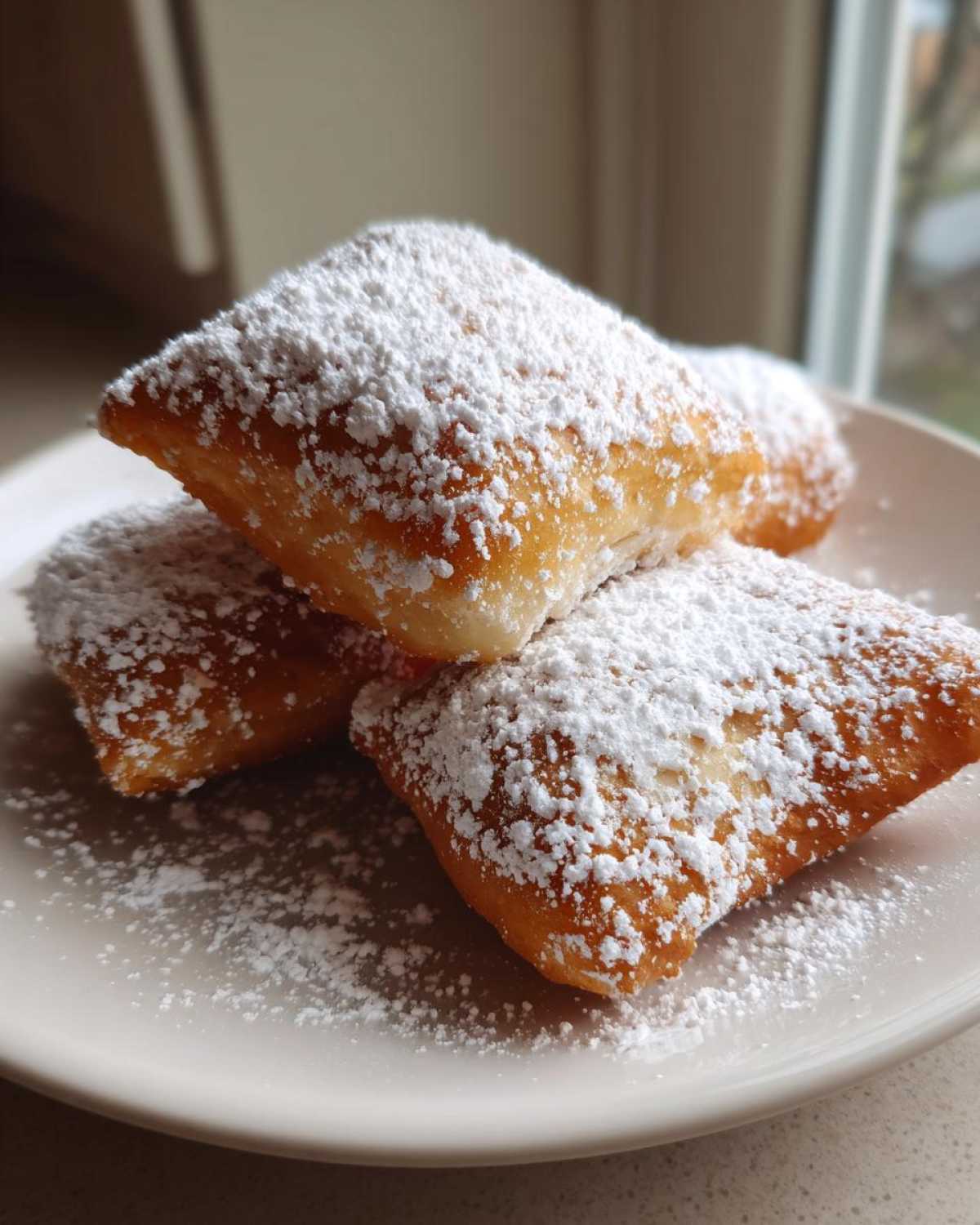
Expert Tips for Perfect Easy French Beignets (Authentic and Delicious)
Listen, I know this is meant to be the easy route, but frying always involves a few little moments where you need to be paying attention. My biggest piece of advice? Respect the oil temperature! If it dips even slightly below 350°F while you’re frying, those lovely dough squares will soak up the oil like sponges, and bye-bye, fluffiness. You have to keep that thermometer handy and watch it like a hawk.
When you’re rolling out your dough, if it starts feeling sticky, try to resist dumping in a pile of extra flour. Adding too much flour ends up making them dense, and we are aiming for pillowy here, remember? Just a tiny dusting on your hands or the rolling pin is usually enough to keep things manageable.
Also, since we are talking authenticity, remember that these are yeast-leavened. This gives you that wonderful, slightly chewy, light texture that pops up beautifully in the middle. That’s different from the New Orleans style which usually relies on a choux pastry base. Stick to this yeast method for true traditional flavor. If you’re looking for another way to use your fryer oil wisely, you have to try roasting some lemon garlic roasted potatoes next time!
Variations for Your Quick French Fritters Recipe
Look, while the classic presentation of these pillowy French doughnuts—just fried dough and a blizzard of powdered sugar—is perfection, sometimes you want to jazz things up a tiny bit. But remember, we promised easy, so we aren’t breaking out the complicated glazes here!
The easiest switch, hands down, is swapping that simple dusting for a cinnamon sugar mix. Just mix about a quarter cup of granulated sugar with a teaspoon of ground cinnamon. As soon as the beignets come out of the oil and the excess drips off, toss them gently in that mixture while they are still warm. Wow, that smells amazing!
If you really need a little something extra, you can make a super quick vanilla drizzle, though traditionally they skip this. Whisk together a half cup of powdered sugar with a splash of milk and a teaspoon of vanilla extract until it’s just runny enough to drizzle off the spoon. Make sure you don’t over-mix it, or it will become too thin.
These quick French fritters are so good plain that sometimes I just sprinkle a little lemon zest over the powdered sugar for an unexpected bright note next to the richness from the oil. It’s an easy trick that feels super elegant! If you’re looking for a different kind of easy, you have to check out my recipe for sweet heat Cajun cauliflower.
Serving Suggestions for Delicious Light Fried Dough
You’ve made these beautiful, light fried dough pillows—now what? You simply cannot let them sit around; they are an immediate gratification food! The most classic way to enjoy authentic French beignets is exactly how they serve them early in the morning or late at night in Paris: piping hot alongside something strong and warm.
Definitely serve these with a strong cup of dark roast coffee. If you are having these as an evening treat, nothing beats a velvety hot chocolate for dipping. The warm liquid sets off the puffiness of the dough perfectly. If you just made a batch of my mulled wine, trust me, a tiny sip cuts through the richness wonderfully, too!
And please, for the love of all things delicious, serve them immediately after dusting. Once they cool, the sugar melts right into the surface, and that wonderful, pillowy texture starts to deflate just a tiny bit. Have everyone gather around so they get one straight from the cooling rack to the plate—that’s when they are truly transcendental!
Storage and Reheating Instructions for Easy French Beignets
Look, I’m just going to be honest with you: these are meant to be eaten the second they come out of the oil. That puff factor? It’s fleeting! Once they start to cool down, they lose some of that magical lightness, even if you have the best easy beignet recipe in the world. Don’t even think about saving them until tomorrow expecting them to be exactly the same.
But life happens, right? If you happen to have any leftover traditional French doughnuts, the absolute worst thing you can do is stick them in the microwave. They will turn into sad, tiny tires, and nobody wants that!
If you have to store them, make sure they are completely cool first. Pop them into an airtight container—you can line it with a paper towel to soak up any residual oil—and keep them on the counter for up to a day. Refrigeration is a no-go; it just dries them out faster.
To reheat, you need to bring the crispness back. I use my oven; forget the microwave! Set your oven to about 325°F (160°C). Lay the beignets out in a single layer on a baking sheet. Warm them for just 5 to 7 minutes. This gentle heat revives the interior without turning them hard. When they pop out, give them a fresh, fast dusting of confectioners’ sugar because the old sugar will have melted. It’s almost as good as fresh, I promise!
If you are planning on leftovers, you are probably cooking for a crowd, which means you need a main dish that’s just as easy, like this slow cooker maple Dijon chicken recipe to let you focus on the frying!
Frequently Asked Questions About Making Easy French Beignets
I know when you see yeast dough, you might worry about timing, or maybe you’ve heard whispers about the New Orleans famous version. Don’t sweat it! Here are the answers to the questions I get all the time about making these simple, traditional French doughnuts at home.
Can I make the dough for these Easy French Beignets ahead of time?
Yes, you totally can, and it’s a great trick for weekend mornings! Once the dough has done its first rise and you’ve punched it down gently, you can wrap it tightly in plastic wrap and stick it in the fridge for up to 24 hours. This cold fermentation actually develops a little more flavor, which is cool! Just make sure you let the dough sit at room temperature for about 45 minutes to an hour before rolling it out. That slight chill makes it much easier to handle, which is perfect for keeping things simple.
What is the difference between these Traditional French Doughnuts and New Orleans Beignets?
This is a great question, and it gets right at authenticity! These Authentic French Beignet Recipe pillows are yeast-leavened, just like I mentioned earlier. We use yeast to get that wonderful, light interior that puffs up big and airy. New Orleans beignets, on the other hand, are typically made with a choux pastry base—that’s the same dough used for cream puffs. Choux dough is cooked on the stove first, which gives it a slightly different texture; it can sometimes feel a bit lighter but also a bit more delicate. Stick with this yeast recipe if you truly want that classic, pillowy French doughnut experience.
My beignets are greasy. What went wrong with my deep frying?
Ugh, nobody likes a greasy beignet! I’ve done this more times than I’d like to admit when I was first learning how to make these Fluffy Beignets at Home. Nine times out of ten, it means your oil temperature was too low when you dropped them in. If the oil isn’t hot enough—aiming for that sweet spot of 360°F—the dough soaks up the oil before the crust has a chance to form and seal itself. You need a dedicated kitchen thermometer for this part; trust me, eyeballing it just doesn’t work for frying. If they come out heavy, reheat your oil until it’s smoking just a tiny bit, let it settle, and try the next batch!
If you often find yourself dealing with oil messes, you might enjoy learning how to make this amazing Mexican street corn dip, which involves way less splattering!
Nutritional Estimates for Your Delicious Light Fried Dough
Now, while these aren’t exactly health food—we are deep-frying dough and covering it in sugar, after all—it’s good to have a general idea of what you’re enjoying! Remember, these numbers swing wildly depending on how much sugar you dust on top and the exact size of your cutouts. If you’re making these for a party, you know everyone is going to want more than one serving anyway!
Here is a general estimate based on one **Delicious Light Fried Dough** piece:
- Serving Size: 1 beignet
- Calories: 180
- Fat: 8g
- Carbohydrates: 24g
- Sugar: 5g
- Protein: 4g
This estimate is based on standard pantry ingredients and uses the approximate amount of oil absorbed during frying. For things like my coffee banana protein shake, the numbers are much more predictable, but who is counting macros when eating fried dough, right?
Nutritional Estimates for Your Delicious Light Fried Dough
Now, I know what you’re thinking: “Are these perfect, Authentic French Beignet Recipe pillows secretly secretly low-calorie?” Ha! If only! Look, we are deep-frying dough and covering it with a cloud of confectioners’ sugar, so we aren’t pretending this is a kale salad, right? But still, it’s good to have a general idea of what you’re enjoying for those special mornings!
These numbers are based on averages—how much oil the dough decides to absorb (which sometimes feels like a total surprise!) and the size of your cuts. If you are making these for a crowd, you should always weigh the nutritional information as a rough guide. I’m definitely not weighing mine when I make them, but here are the numbers I keep on file for reference:
- Serving Size: 1 beignet
- Calories: 180
- Fat: 8g
- Carbohydrates: 24g
- Sugar: 5g
- Protein: 4g
This estimate is based on standard pantry ingredients and uses the approximate amount of oil absorbed during frying. For things like my coffee banana protein shake, the numbers are much more predictable, but who is counting macros when eating fried dough, right? Enjoy them warm!
PrintEasy Authentic French Beignets
Make light, fluffy, traditional French beignets at home with this simple, step-by-step recipe.
- Prep Time: 20 min
- Cook Time: 15 min
- Total Time: 1 hour 50 min
- Yield: About 18 beignets
- Category: Dessert
- Method: Deep Frying
- Cuisine: French
- Diet: Vegetarian
Ingredients
- 1 cup warm water (about 105°F)
- 2 teaspoons active dry yeast
- 1/4 cup granulated sugar
- 1 large egg, lightly beaten
- 1/2 teaspoon salt
- 3 cups all-purpose flour, plus more for dusting
- Vegetable oil, for frying
- Confectioners’ sugar, for dusting
Instructions
- Combine the warm water and yeast in a large bowl. Let it stand for 5 minutes until foamy.
- Stir the sugar, beaten egg, and salt into the yeast mixture.
- Gradually add the flour, mixing until a soft, slightly sticky dough forms.
- Knead the dough on a lightly floured surface for about 5 minutes until smooth.
- Place the dough in a lightly oiled bowl, cover it with plastic wrap, and let it rise in a warm place for 1 to 1.5 hours, or until doubled in size.
- Gently punch down the risen dough. On a well-floured surface, roll the dough out to about 1/4-inch thickness.
- Cut the dough into 3-inch squares or circles.
- Heat 2 inches of vegetable oil in a deep, heavy-bottomed pot or Dutch oven to 360°F (182°C). Use a thermometer to monitor the temperature.
- Carefully drop 3 or 4 dough pieces into the hot oil, being careful not to overcrowd the pot.
- Fry for 1 to 2 minutes per side, until golden brown and puffed.
- Remove the beignets with a slotted spoon and place them on a wire rack lined with paper towels to drain excess oil.
- Dust generously with confectioners’ sugar while still warm. Serve immediately.
Notes
- Maintain the oil temperature between 350°F and 375°F for the best results. If the oil is too cool, the beignets will absorb too much oil and be greasy.
- If the dough sticks while rolling, add a small amount of flour, but avoid adding too much, as this will make the final product dense.
- This recipe yields a texture closer to traditional French beignets, which are yeast-leavened, rather than the choux-based New Orleans style.
Nutrition
- Serving Size: 1 beignet
- Calories: 180
- Sugar: 5
- Sodium: 150
- Fat: 8
- Saturated Fat: 2
- Unsaturated Fat: 6
- Trans Fat: 0
- Carbohydrates: 24
- Fiber: 1
- Protein: 4
- Cholesterol: 30