

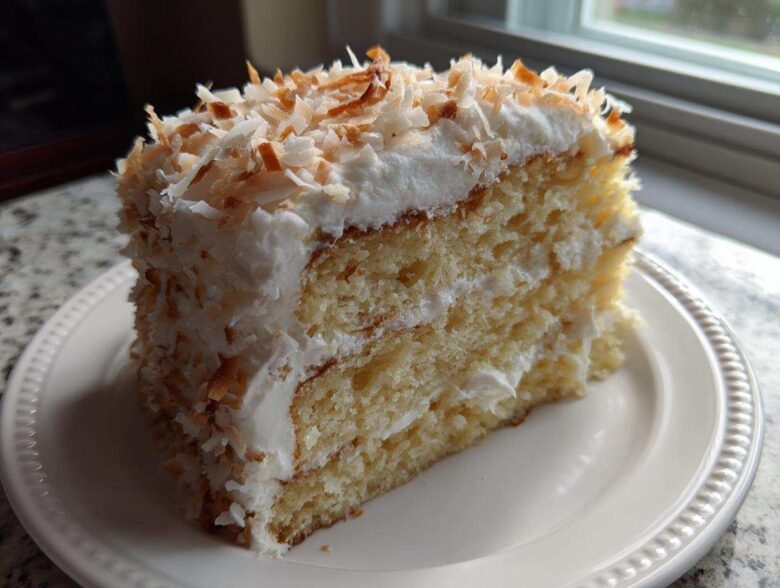
Oh, honey, if you want to bake something that truly whispers of a lazy Sunday afternoon on a grand Southern porch, you absolutely have to master the art of the quintessential coconut cake. I’m not talking about some skimpy, dry sheet cake version, nope! We are going straight for the gold standard: The Best Moist & Fluffy Southern Coconut Cream Cake. This specific coconut cake recipe isn’t just something I throw together for company; it’s the one I make when my heart needs comfort. It’s rich in cream cheese tang, packed with real coconut, and the layers? They are so light they practically float off the plate. Trust me, once you try this, every other attempt at a classic coconut dessert will feel like it’s missing something special.
Why This Southern coconut cake Recipe Stands Out (EEAT Focus)
What makes this cake different from every other recipe out there? It’s all about respecting the ‘Southern coconut cake’ tradition while making sure you get that perfect bakery result at home. I’ve tested dozens of ways to get the height and tenderness just right, and I finally nailed the balance. This recipe guarantees a tender crumb that doesn’t crumble when you slice it, and frosting that tastes like pure, sweet heaven.
- Moisture levels are locked in perfectly—no dry edges here!
- The use of cream cheese in the frosting stops it from being overly sweet.
- It uses toasted coconut *inside* the layers, giving you flavor in every single bite.
Achieving the Ultimate Moist coconut cake Layers
Seriously, throw out your cold eggs! For these light, fluffy cake layers, everything needs to be at room temperature. That means the milk, the egg whites, and especially that butter. When you properly cream the butter and sugar—really whipping them until they are pale—you’re manually creating the tiny air pockets the cake needs to rise beautifully and stay moist. It feels like extra work, but the texture of this coconut cake depends on it!
The Dreamy Homemade coconut frosting Recipe
This frosting is the real secret sauce that elevates this from just a nice cake to the best coconut cake you’ve ever made. Most basic buttercreams are too heavy, but by adding a little bit of cream cheese, we get the perfect structure and a slightly welcome tanginess. This stabilizing tang cuts through the sweetness of the sugar and the coconut perfectly. That rich, homemade coconut frosting homemade is what makes this whole coconut cake feel truly special.
Ingredients for the Best Moist & Fluffy coconut cake
Alright, let’s get the mise en place ready! Having everything measured out before you start baking saves so much headache later, especially when dealing with quick-mixing batters like this. Remember, for this moist coconut cake recipe, room temperature ingredients are your best friends—they emulsify better and give you that superior texture. You’ll need three main sections of ingredients:
Don’t forget that toasting step for the coconut! It’s non-negotiable for deep flavor. You just spread it thin on a baking sheet and pop it in a 350°F oven for about 5 to 8 minutes, watching like a hawk because coconut burns faster than popcorn!
For the Light Fluffy coconut cake Layers
This list is for the actual cake structure. Notice the three 8-inch round pans needed for a proper coconut layer cake.
- 1 3/4 cups all-purpose flour
- 1 3/4 cups granulated sugar
- 1 tablespoon baking powder (make sure it’s fresh!)
- 1/2 teaspoon salt
- 1/2 cup unsalted butter, softened (this MUST be soft!)
- 4 large egg whites, room temperature (separate them carefully!)
- 1 cup whole milk, room temperature
- 1 teaspoon vanilla extract
- 1/2 cup unsweetened shredded coconut, toasted (this is for mixing *into* the batter)
For the Rich coconut cream cake Recipe Frosting
This is where the magic happens to create that incredible coconut cream cake recipe finish. Making sure your butter and cream cheese are perfectly soft ensures you don’t end up with little lumps in your beautiful coconut frosting homemade.
- 1 cup (2 sticks) unsalted butter, softened
- 1/4 cup cream cheese, softened
- 4 cups powdered sugar, sifted (Sift it, trust me, or you’ll be whisking lumps forever!)
- 1/2 cup heavy cream
- 1 teaspoon coconut extract (this boosts that tropical flavor!)
For the Final Flaky Coating
This last part makes it look like a true, professional Southern coconut cake. You need the flakes!
- 2 cups sweetened flaked coconut, toasted (this is for coating the outside—use the bigger flakes here!)
Step-by-Step Instructions for Your Southern coconut cake
Okay, let’s stop talking about how amazing this coconut cake is and actually get it in the oven! Baking this fluffy masterpiece involves three main phases: getting the pans ready and baking the layers, whipping up that heavenly frosting, and putting it all together. Follow these steps closely, and you’ll have a show-stopping Southern coconut cake in no time. Remember to plan ahead; this isn’t a throw-it-together-in-twenty-minutes situation, but it’s worth every minute, I promise!
Preparing and Baking the coconut layer cake
The foundation of a moist coconut cake recipe starts right here with careful preparation. Don’t rush these first steps; they set you up for success later on!
- Start by preheating your oven to 350°F (175°C). Grab those three 8-inch round pans, grease them well, and then flour them lightly. If you’re super cautious like me, you can always cut parchment circles to line the bottoms too—it’s insurance against sticking!
- In your biggest bowl, whisk together the dry stuff: that flour, the sugar, the baking powder, and the salt. Just give it a good mix with a whisk to make sure everything is distributed evenly.
- Now, add the softened butter to those dry ingredients. Mix it on low speed (or use a pastry blender if you’re doing it by hand) until it starts looking like coarse sand or wet crumbs.
- In a separate, smaller bowl, get your liquid ingredients ready. Whisk together the room temperature egg whites, the room temperature whole milk, and the vanilla extract until they are fully acquainted.
- Slowly start adding those wet ingredients into your crumbly dry mixture. Turn your mixer speed up to medium, but only mix until it’s *just combined*. Stop as soon as you don’t see streaks of dry flour anymore.
- This is key for flavor: Gently fold in that pre-toasted 1/2 cup of shredded coconut. Use a spatula for this so you don’t knock out all the air you just worked so hard to create!
- Divide your beautiful, creamy batter evenly among your three prepared pans. Try to eyeball it, or use a kitchen scale if you’re feeling precise!
- Bake them for about 25 to 30 minutes. You’ll know they are done when a toothpick inserted right into the center comes out clean, or maybe with just a few moist crumbs clinging to it.
- Let those layers cool down in their pans on a wire rack for about 10 minutes. This lets them firm up enough so they don’t tear when you flip them out onto the rack to cool completely. They must be fully cool before frosting, or you’ll have a meltdown! You can check out more easy layer cake recipes for timing tips, but don’t rush the cool down!
Making the Fluffy coconut frosting Homemade
While those layers are cooling (seriously, be patient!), let’s make the frosting that makes this the star of the show.
- In your mixer bowl, beat the 1 cup of softened butter and the softened cream cheese together until they are really smooth and creamy. No lumps allowed in this coconut cream cake recipe!
- Now, add your sifted powdered sugar slowly, alternating with the heavy cream. Beat it on a medium-low speed first so you don’t end up with a sugar cloud exploding across your kitchen! Beat it until it’s light and fluffy.
- Finally, mix in that potent coconut extract. Taste it! If you want it stronger, add just a tiny bit more, but go slow—extracts are powerful!
Assembling and Decorating Your coconut cake
This is the fun part where your layers magically transform into that stunning bakery style coconut cake!
- Take your first cooled layer and place it on your serving stand or plate. Scoop about a third of your frosting onto it and spread it evenly right to the edges.
- Top that with your second layer, and then repeat the frosting process—nice and smooth!
- Put the final layer on top, and then go ahead and cover the top and all the sides of the entire cake with the rest of that amazing fluffy coconut cake frosting. Don’t worry about making it perfectly smooth right now; the coconut will hide any swoops!
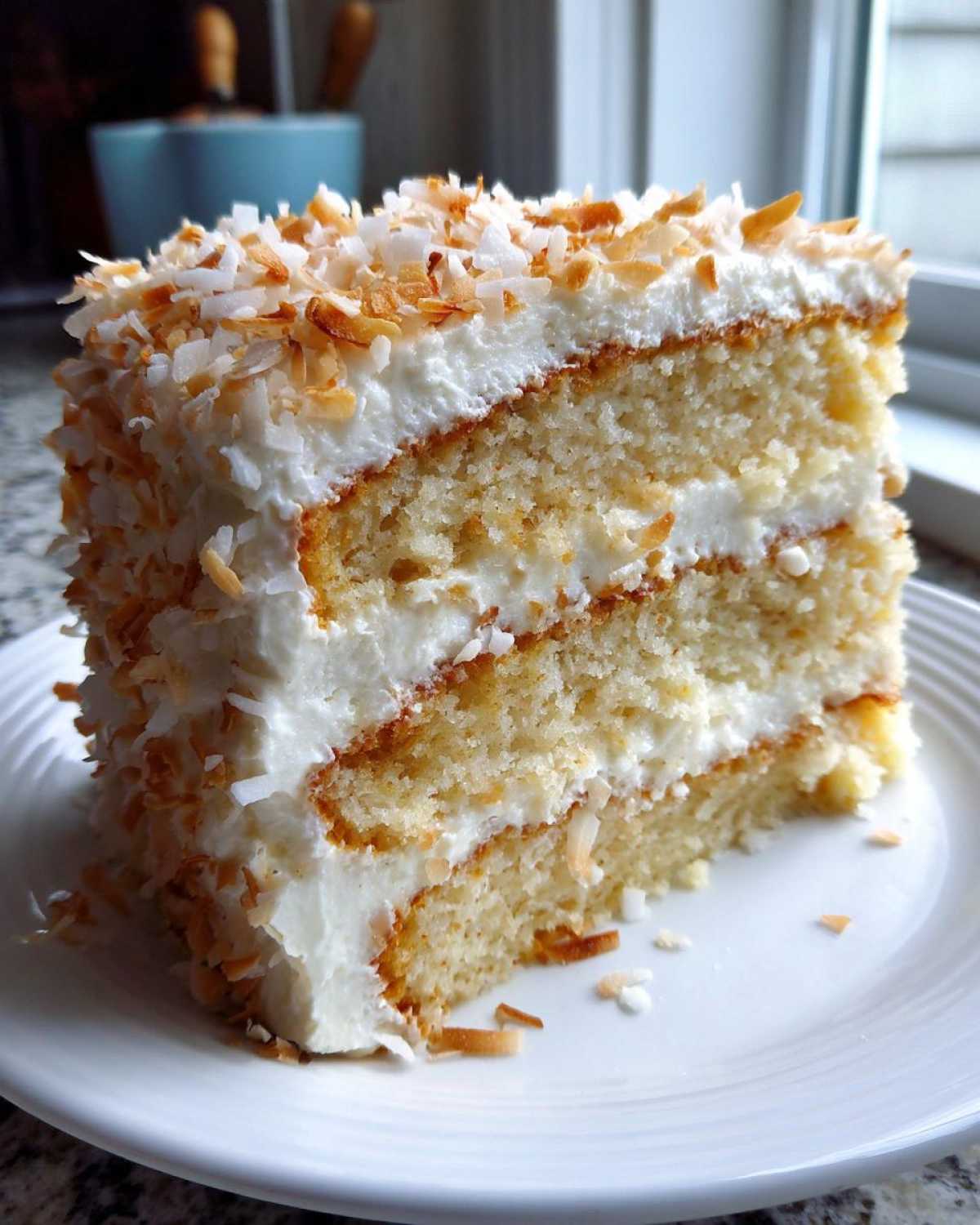
- This is the grand finale: Take those 2 cups of toasted flaked coconut and gently press them onto the top and sides of the cake. Cover every bit of that beautiful frosting until it looks like a cloud of coconut flakes!
Tips for a Perfect bakery style coconut cake Every Time
Look, the recipe gives you the blueprint, but the baker brings the magic, right? I’ve picked up tons of little tricks over the years—mostly the hard way, by burning coconut and having to start over! Getting that professional, bakery style coconut cake finish comes down to a few small actions that make a huge difference. These aren’t just suggestions; they are rules I swear by now when I make this moist coconut cake recipe.
And listen to me on this one point: if your butter and your milk are cold, your batter will be curdled and dense. It’s a fact! Always, always let your primary wet ingredients reach room temperature before you even think about turning the mixer on. It ensures that smooth, pillowy structure we’re aiming for!
Mastering the Coconut Toasting Technique
Coconut scorches so fast, and I mean instantaneously. If you burn the flakes, you ruin the whole flavor profile of your coconut layer cake. You need patience here, more than anywhere else in this entire recipe. You should spread the coconut in a really thin, single layer on a baking sheet. I prefer a light metal one for better heat conductivity.
Set your oven to 350°F (175°C) and slide that pan in. Now, you must stay in the kitchen! Seriously, set a timer for five minutes, and then you check it every minute after that. You’re looking for a light golden color—the second you see edges starting to turn deep brown, pull it out immediately. The residual heat keeps cooking it, so better to pull it out when it looks slightly *underdone* than overdone.
Moisture Secrets for Your coconut cake
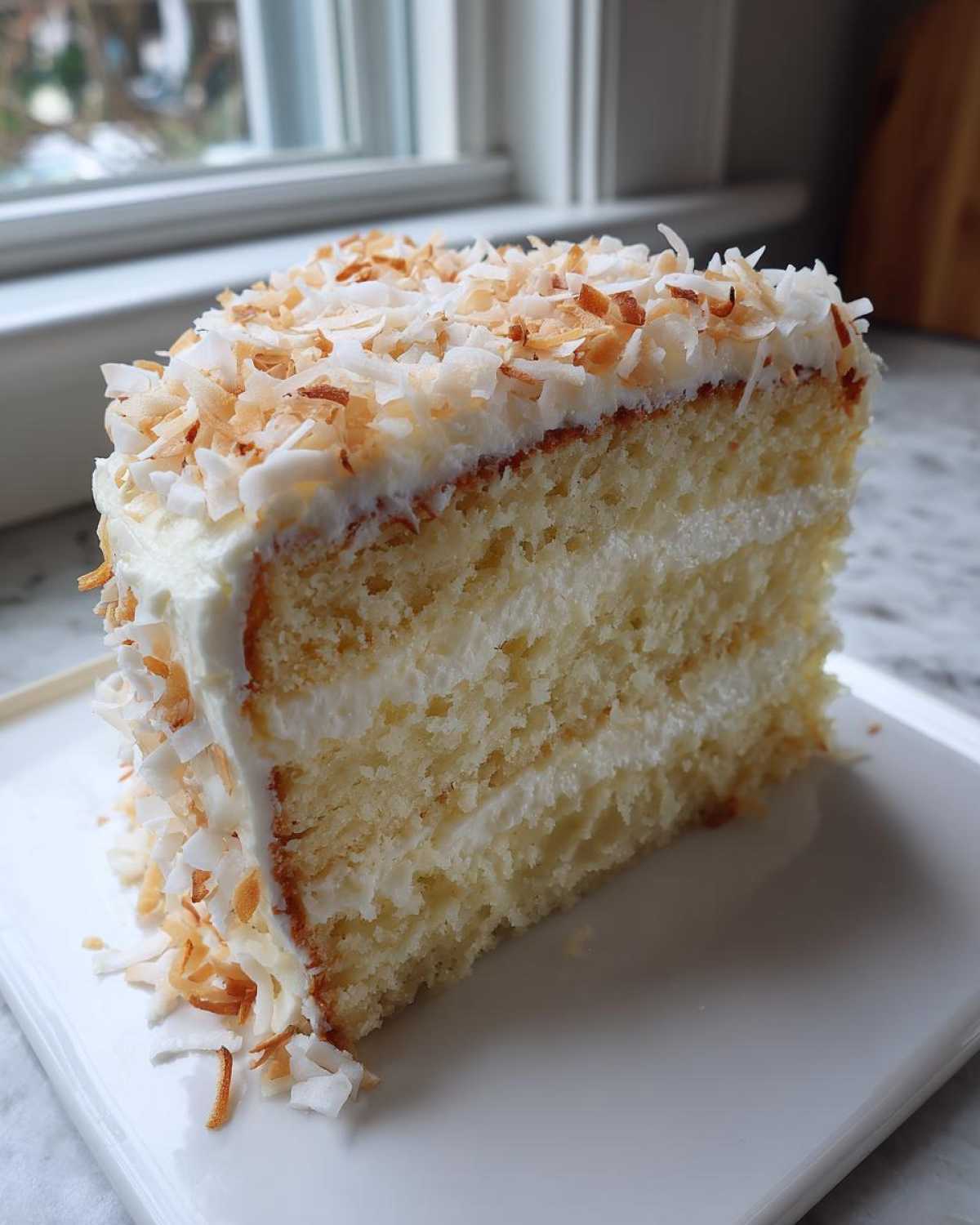
The cake is already pretty moist because of the milk and the shredded coconut mixed in, but if you want that truly *glorious*, incredibly tender texture that rivals the best bakery, you need a secret weapon. Right after your cake layers come out of the oven—while they are still slightly warm—I take a pastry brush and give them a very light, quick brush all over with coconut milk.
Don’t soak it! You aren’t making a bread pudding here. Just one or two gentle coats of the canned coconut milk adds an incredible depth of coconut flavor and locks in moisture like crazy. This simple addition to this moist coconut cake recipe is why people always ask me if I bought this cake from a professional shop. It makes those light fluffy cake layers just sing!
Storage and Reheating Instructions for Your coconut cake
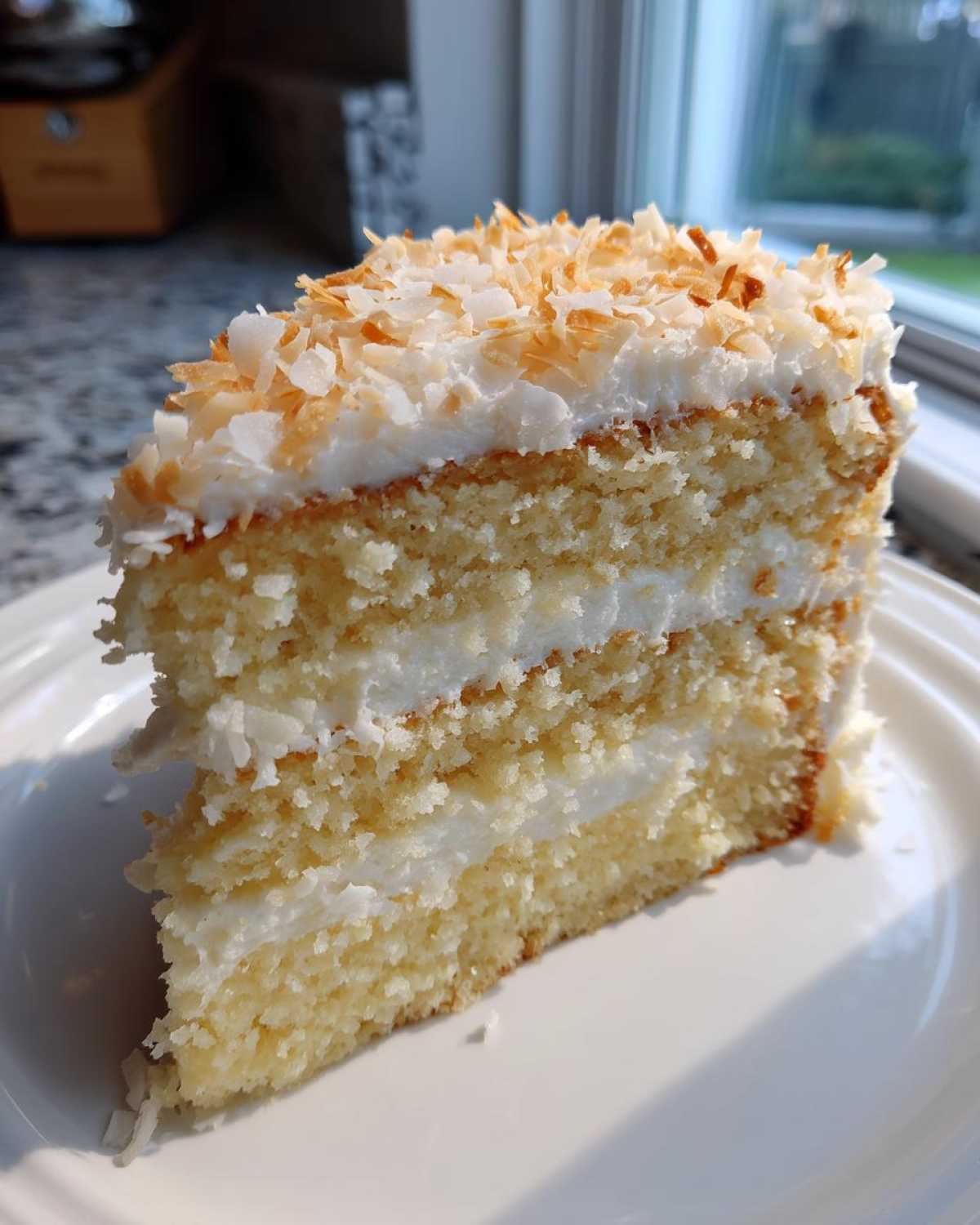
When you finally wrestle this gorgeous coconut cake out of the kitchen, the last thing you want is to mess up the texture by storing it wrong! Because we used that decadent cream cheese frosting, we do have to be a little smarter about storage than if we had used a simple meringue icing.
For the absolute best flavor and texture—especially if you want to maintain that fluffy coconut cake layer integrity—try to keep it at room temperature for as long as possible. Covered loosely with a cake dome or a large, overturned bowl, this cake will do great on the counter for about two days. The high amount of sugar and fat in the frosting acts as a bit of a preservative, so it stays pretty stable.
Now, if you’re making this ahead of time or if your kitchen is just plain hot, refrigeration becomes necessary. When you put a frosted cake in the fridge, the cake layers often dry out faster. To fight that, make sure you cover it *tightly* with plastic wrap before it goes into the cold air. Once you decide it’s time to serve a slice, pull it out at least an hour before serving. That frosting needs to soften up so you get that lovely, smooth consistency we worked so hard for!
I haven’t had luck freezing this cake beautifully once it’s frosted, so I really recommend baking the layers, wrapping them tightly, and freezing them unfrosted if you need to prep way ahead. Then, just thaw them overnight and frost the day you plan to serve your perfect homemade coconut cake!
Variations on the Classic coconut cake
This coconut cake is beautiful as is, a true testament to classic Southern baking, but sometimes you want to give a recipe a little twist, right? I love tinkering with things, especially when it comes to adding a little extra vacation vibe to my desserts! You don’t have to change the core recipe structure at all; a few simple swaps make this layer cake feel brand new.
If you made a gorgeous batch of this batter and suddenly realize you only have one large Bundt pan instead of three rounds, don’t panic! The batter handles the change like a champ. For a wonderful coconut bundt cake, just grease and flour that Bundt pan really well—remember, those crevices love to hang onto cake!
Baking it in a Bundt pan will take longer, usually closer to 50-60 minutes depending on how deep your pan is. You have to be patient here, but the resulting cake looks so stunning when it comes out. You can even skip the layer assembly and just pour all that glorious fluffy coconut cake frosting right over the top when it’s cool!
For a more vibrant flavor that leans into that tropical coconut dessert vibe, try incorporating citrus! This is a trick I learned from my neighbor when she made a stunning cake for a summer party. Right before you fold in the shredded coconut in Step 6, add the zest of one whole lime directly into the batter.
The lime zest brightens up the whole cake, and when paired with that coconut extract in the frosting, it tastes absolutely electric. It’s a subtle change, but it makes the cake feel lighter and perfect for warmer weather gatherings. It’s amazing how a little zing can transform something so traditional! If you want more ideas on fruity loaf variations, you might find inspiration over at my post on lemon raspberry loaf cake recipes; the flavor concepts are similar!
Another fun easy substitution, especially if you want to skip the full layer stack, is going for a poke cake! If you bake the batter in a 9×13 pan instead of rounds, wait until it’s warm, poke holes everywhere with a skewer, and then pour canned sweetened condensed milk or liquid coconut milk right over the top before it chills. Once it’s frosted, it becomes an unbelievably rich coconut cream poke cake version of our classic!
Serving Suggestions for this coconut layer cake
Now that you have this towering, beautiful, incredibly moist coconut layer cake sitting on your counter, the only real question left is: What do I serve alongside it? Honestly, this cake is rich enough that it doesn’t really *need* much! It stands perfectly well on its own as the star dessert. But because it’s heavy on richness and sweetness—thanks to that amazing cream cheese frosting—we want to balance it out a bit, especially if you’ve made it for a big crowd or a massive celebration.
For midday events, like a nice afternoon birthday party (this is definitely one of my top birthday cake ideas coconut!), a simple, hot beverage is the perfection pairing. The slight bitterness of a freshly brewed, strong black coffee is just divine when cut against that sweet coconut. If coffee isn’t your thing, a classic cup of hot black tea works just as beautifully. The warmth of the drink contrasts so nicely with the coolness of the frosting!
If you are serving this as the finale to a larger meal, especially during the holidays or a heavy summer BBQ, you might want a slightly acidic, light dessert element on the side. This helps cleanse the palate after all that rich butter and sugar. I sometimes put out a very simple bowl of fresh, slightly tart fruits nearby. Think sliced raspberries or perhaps some gently macerated strawberries—nothing heavy or syrupy!
Avoid serving this with other super heavy desserts, like chocolate cake or heavy puddings, because no one will be able to truly appreciate the delicate flavor profile of our Southern coconut cake! It deserves the spotlight. A small side of fresh citrus segments—mandarin oranges work great—also really pulls out the subtle tropical notes we worked into the frosting. Enjoy every single bite!
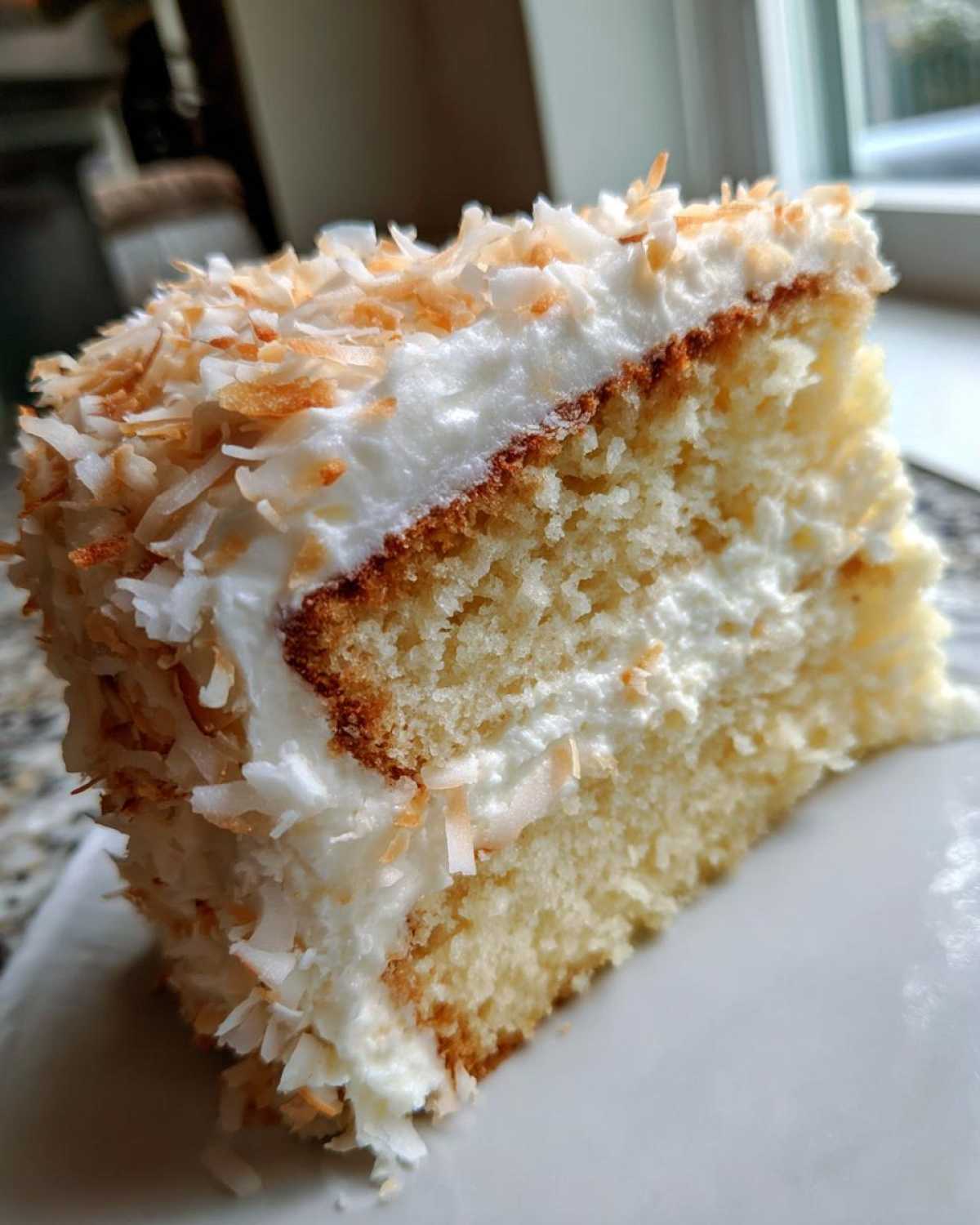
Frequently Asked Questions About Making coconut cake
I totally get it; sometimes you have specific questions before you dive into a big baking project like this incredible coconut cake. I’ve tried to cover everything in the steps above, but a few things come up again and again when people try to master the Southern coconut cake. Don’t worry if you have a few concerns—that’s what makes us good bakers, asking questions!
Can I make this coconut cake recipe ahead of time?
Yes, absolutely you can break up the work, which makes this less daunting if you’re using it for a big party! The layers are the best part to prep early. Once they are completely cooled, wrap each one securely in plastic wrap, even tossing a layer of foil over that if you want extra protection. They’ll happily chill in the fridge for about three days, or you can freeze them for up to three months. This is the cheat code to making an easy coconut cake! Just make sure you let them come back to room temperature for at least an hour or two before you try to frost them.
On the other hand, I don’t recommend frosting the cake more than a day ahead of time. Because of the cream cheese in the frosting, it does best when it hasn’t spent too long chilling, which can sometimes make the layers feel a little less tender than when freshly frosted. If you have to frost early, just do it the day before you serve a slice.
What is the best way to get light fluffy coconut cake layers?
This brings us right back to the temperature of your ingredients, my friend! If you want those light fluffy cake layers instead of dense bricks, you must use room temperature items—the eggs, the milk, everything. Cold ingredients don’t blend smoothly together; they create separation in the batter, and separation means tough cake.
Secondly, pay close attention to the creaming step. You aren’t just mixing the butter and sugar; you are whipping air into them! Beat them until they are visibly lighter in color, almost pale yellow, and fluffy in texture. That’s where most of your lift comes from, even more so than the baking powder. Slow mixing speed near the end when adding flour also locks in that desirable fluffiness.
Can I use frozen coconut instead of shredded coconut in this coconut cake?
Oh, please don’t! I know frozen bags are convenient, but I really advise against it when making this moist coconut cake recipe. Frozen coconut, even the stuff labeled unsweetened, is usually much wetter than standard bagged shredded coconut. When you add that extra moisture, it throws off the delicate balance of the dry-to-wet ratio we worked out for the batter.
You’ll end up with a heavier batter, and your beautiful layers might sink a bit in the middle, which defeats the purpose of making a fluffy coconut cake in the first place. Just grab a bag of the shelf-stable sweetened or unsweetened shredded coconut and toast it yourself. It’s really worth the five minutes of vigilance!
Need more general baking tips or inspiration for your next showstopper? Head over to my main blog page for all my latest experiments!
Nutritional Information Estimate for Your coconut cake Slice
If you’re keeping track of macros or calories, I wanted to give you a rough idea of what’s in a standard slice of this phenomenal coconut layer cake. Remember, this is based on using all the ingredients listed and dividing it into 12 generous servings. Because this is a butter and cream cheese-heavy frosting, the sugar and fat content run a bit higher, but hey—it’s a celebration cake, right?
Use these figures as a guideline only, since exact values will depend on specific brands of butter or cream cheese you use:
- Serving Size: 1 slice
- Calories: 450
- Sugar: 55g
- Sodium: 210mg
- Fat: 22g
- Saturated Fat: 14g
- Unsaturated Fat: 8g
- Trans Fat: 0.5g
- Carbohydrates: 60g
- Fiber: 2g
- Protein: 5g
- Cholesterol: 55mg
Nutritional Information Estimate for Your coconut cake Slice
If you’re keeping track of macros or calories, I wanted to give you a rough idea of what’s in a standard slice of this phenomenal coconut cake. Remember, this is based on using all the ingredients listed and dividing it into 12 generous servings. Because this is a butter and cream cheese-heavy frosting, the sugar and fat content run a bit higher, but hey—it’s a celebration cake, right?
Use these figures as a guideline only, since exact values will depend on specific brands of butter or cream cheese you use:
- Serving Size: 1 slice
- Calories: 450
- Sugar: 55g
- Sodium: 210mg
- Fat: 22g
- Saturated Fat: 14g
- Unsaturated Fat: 8g
- Trans Fat: 0.5g
- Carbohydrates: 60g
- Fiber: 2g
- Protein: 5g
- Cholesterol: 55mg
The Best Moist & Fluffy Southern Coconut Cream Cake
Bake a classic Southern coconut layer cake featuring moist crumb and rich coconut cream frosting.
- Prep Time: 35 min
- Cook Time: 30 min
- Total Time: 65 min
- Yield: 12 servings
- Category: Dessert
- Method: Baking
- Cuisine: American
- Diet: Vegetarian
Ingredients
- 1 3/4 cups all-purpose flour
- 1 3/4 cups granulated sugar
- 1 tablespoon baking powder
- 1/2 teaspoon salt
- 1/2 cup unsalted butter, softened
- 4 large egg whites, room temperature
- 1 cup whole milk, room temperature
- 1 teaspoon vanilla extract
- 1/2 cup unsweetened shredded coconut, toasted (for cake layers)
- 1 cup (2 sticks) unsalted butter, softened (for frosting)
- 4 cups powdered sugar, sifted
- 1/2 cup heavy cream
- 1 teaspoon coconut extract
- 1/4 cup cream cheese, softened
- 2 cups sweetened flaked coconut, toasted (for coating)
Instructions
- Preheat your oven to 350°F (175°C). Grease and flour three 8-inch round cake pans.
- In a large bowl, whisk together the flour, sugar, baking powder, and salt.
- Add the softened butter and mix on low speed until the mixture resembles coarse crumbs.
- In a separate bowl, whisk together the egg whites, milk, and vanilla extract.
- Gradually add the wet ingredients to the dry ingredients, mixing on medium speed until just combined. Do not overmix.
- Gently fold in the 1/2 cup of toasted shredded coconut.
- Divide the batter evenly among the prepared pans. Bake for 25 to 30 minutes, or until a toothpick inserted into the center comes out clean.
- Let the cakes cool in the pans for 10 minutes before inverting them onto a wire rack to cool completely.
- Prepare the coconut cream frosting: Beat the 1 cup of softened butter and cream cheese until smooth.
- Gradually add the sifted powdered sugar, alternating with the heavy cream, beating until light and fluffy.
- Mix in the coconut extract.
- Once the cakes are completely cool, place one layer on a serving plate. Spread a layer of frosting evenly over the top.
- Place the second layer on top and repeat the frosting process. Top with the final layer.
- Frost the top and sides of the entire cake with the remaining frosting.
- Press the 2 cups of toasted flaked coconut onto the top and sides of the cake.
Notes
- To toast coconut, spread it in a single layer on a baking sheet and bake at 350°F for 5-8 minutes, watching closely to prevent burning.
- For extra moisture, you can brush the cooled cake layers lightly with coconut milk before frosting.
- Use room temperature ingredients for the cake batter and frosting for the best texture.
Nutrition
- Serving Size: 1 slice
- Calories: 450
- Sugar: 55g
- Sodium: 210mg
- Fat: 22g
- Saturated Fat: 14g
- Unsaturated Fat: 8g
- Trans Fat: 0.5g
- Carbohydrates: 60g
- Fiber: 2g
- Protein: 5g
- Cholesterol: 55mg